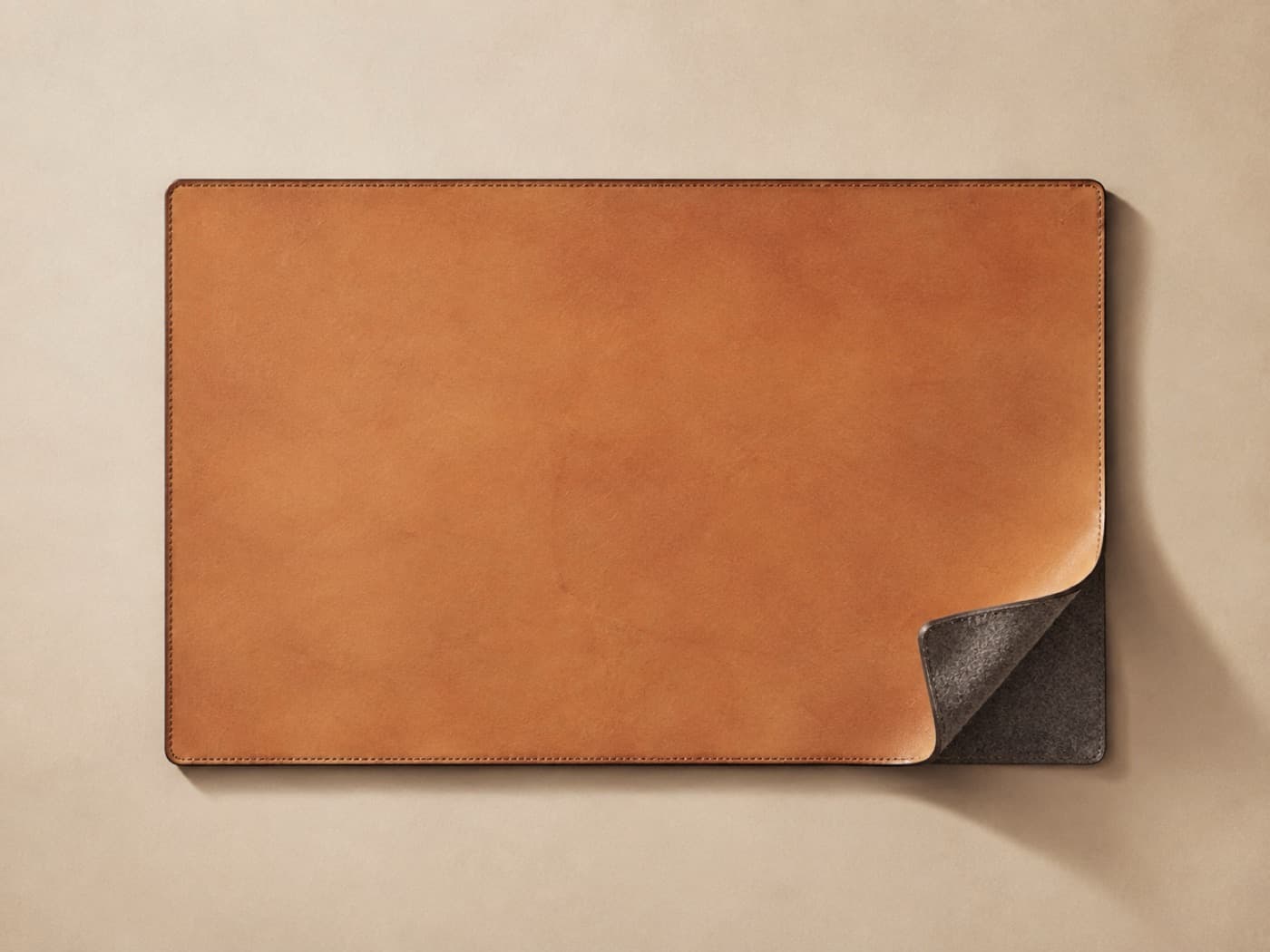
 01
01Desk Mat 60 × 35
99,00 €- Outer size
- 60 × 35 cm
- Thickness
- 2.0 mm
The small format. Fits a narrow writing desk or a shared table where the mat is your half of it.
The collection
Nothing here has a handle, a strap or a shoulder loop. Every entry states its outer size, its thickness, the hide it is cut from and how its underside behaves against a table. Read the numbers first; the photograph is only there to show you the grain.
Line I · Schreibunterlagen
The flat piece the whole desk is built on. Eight sizes, each cut so it clears the desk edge rather than fighting it. Measure the desk once and the rest of the set follows.
Open this line on its own page01The small format. Fits a narrow writing desk or a shared table where the mat is your half of it.
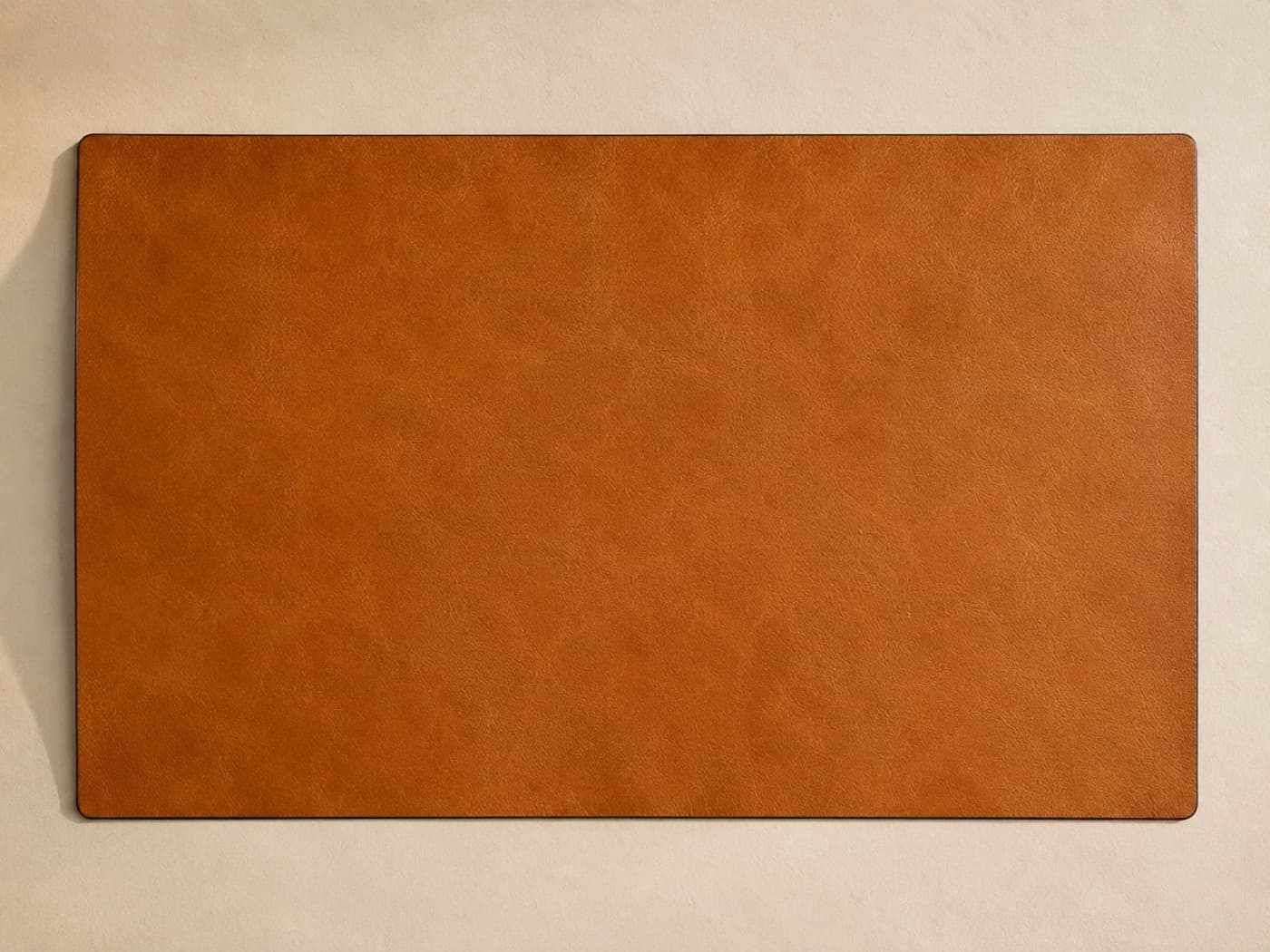 02
02The standard. Covers the working width of most desks between 100 and 120 cm.
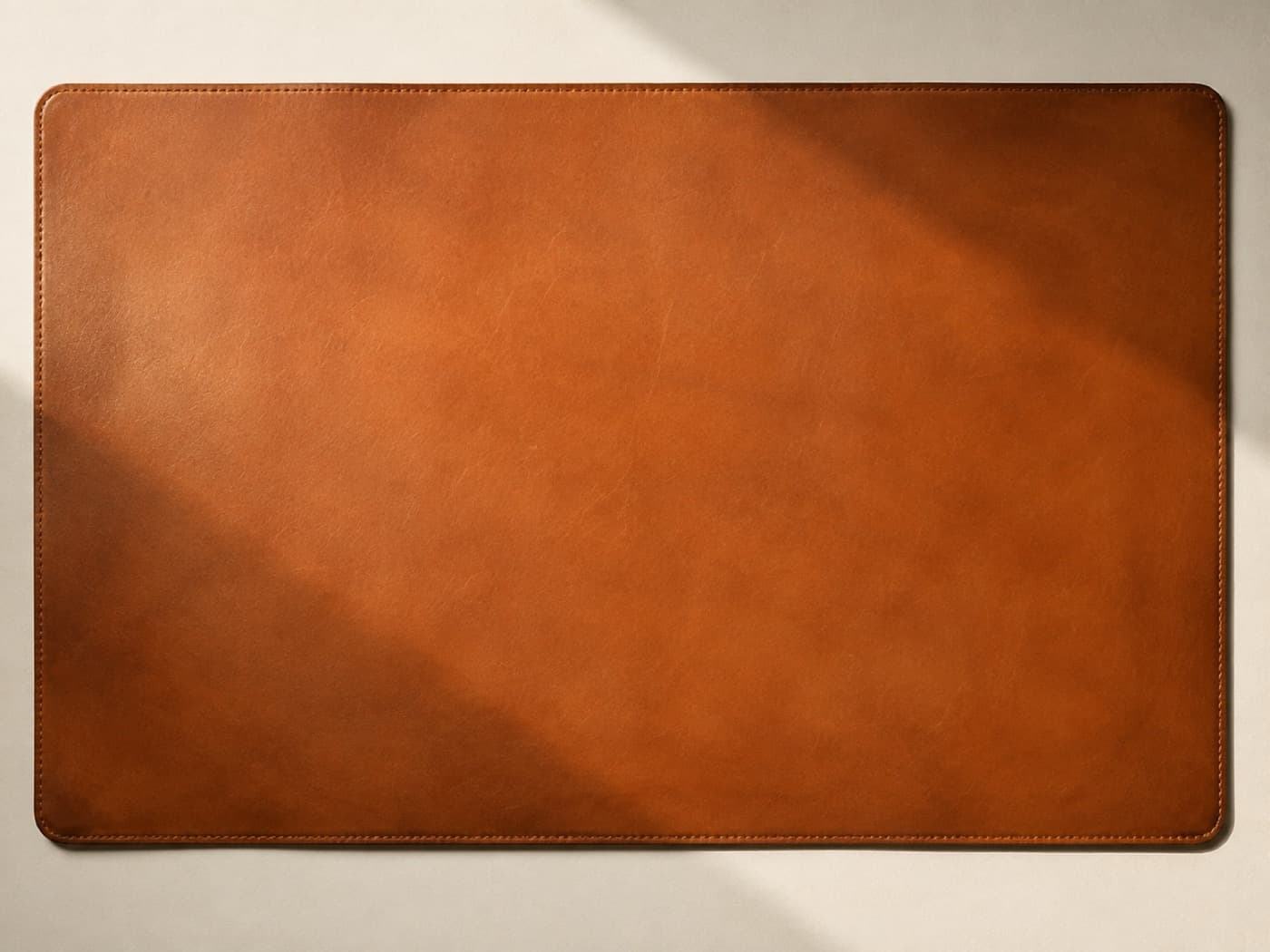 03
03For desks from 140 cm. Deep enough that both forearms rest on leather.
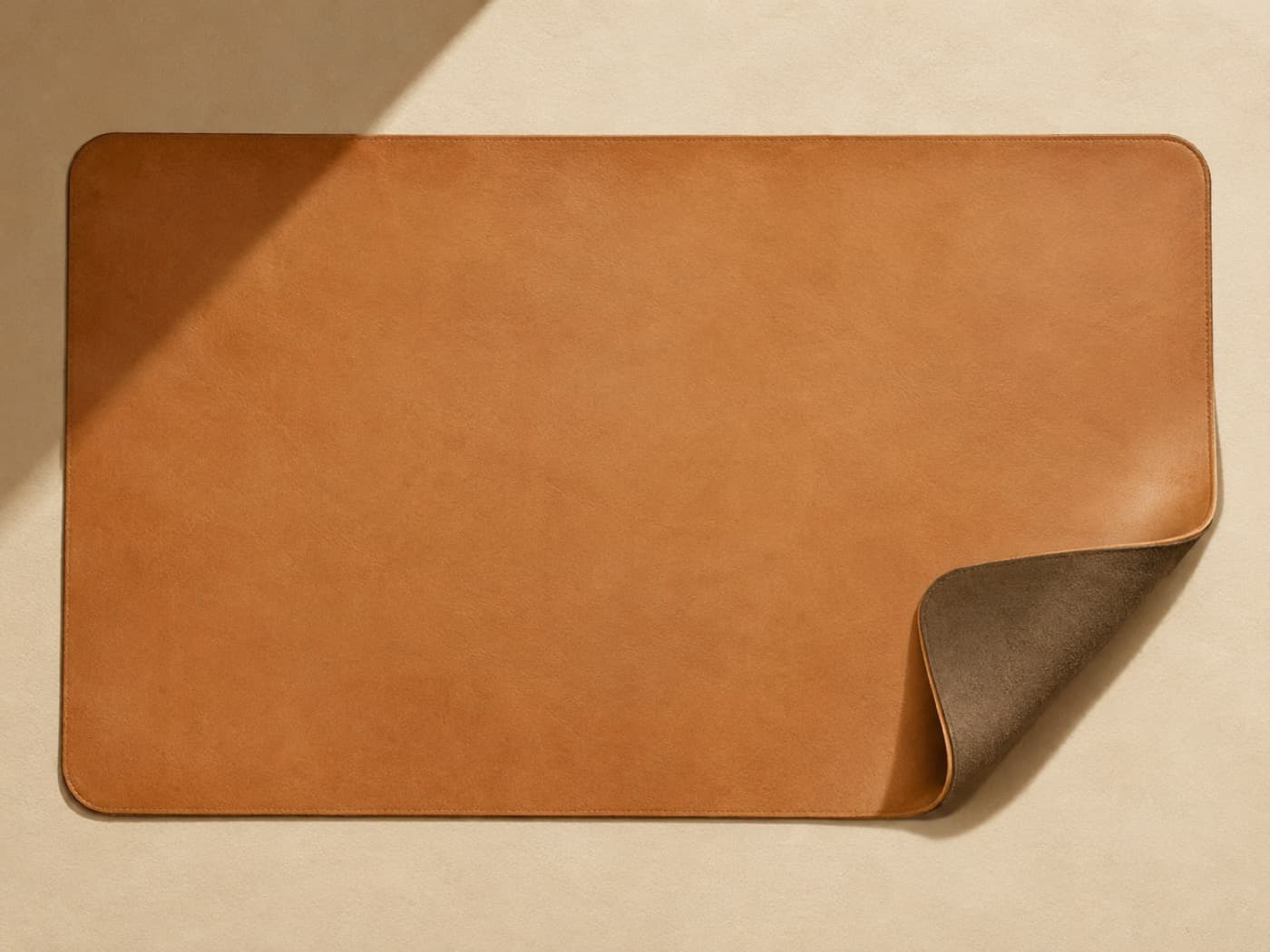 04
04Full-table coverage for desks of 160 cm and up. The largest panel we cut as a stock size.
 05
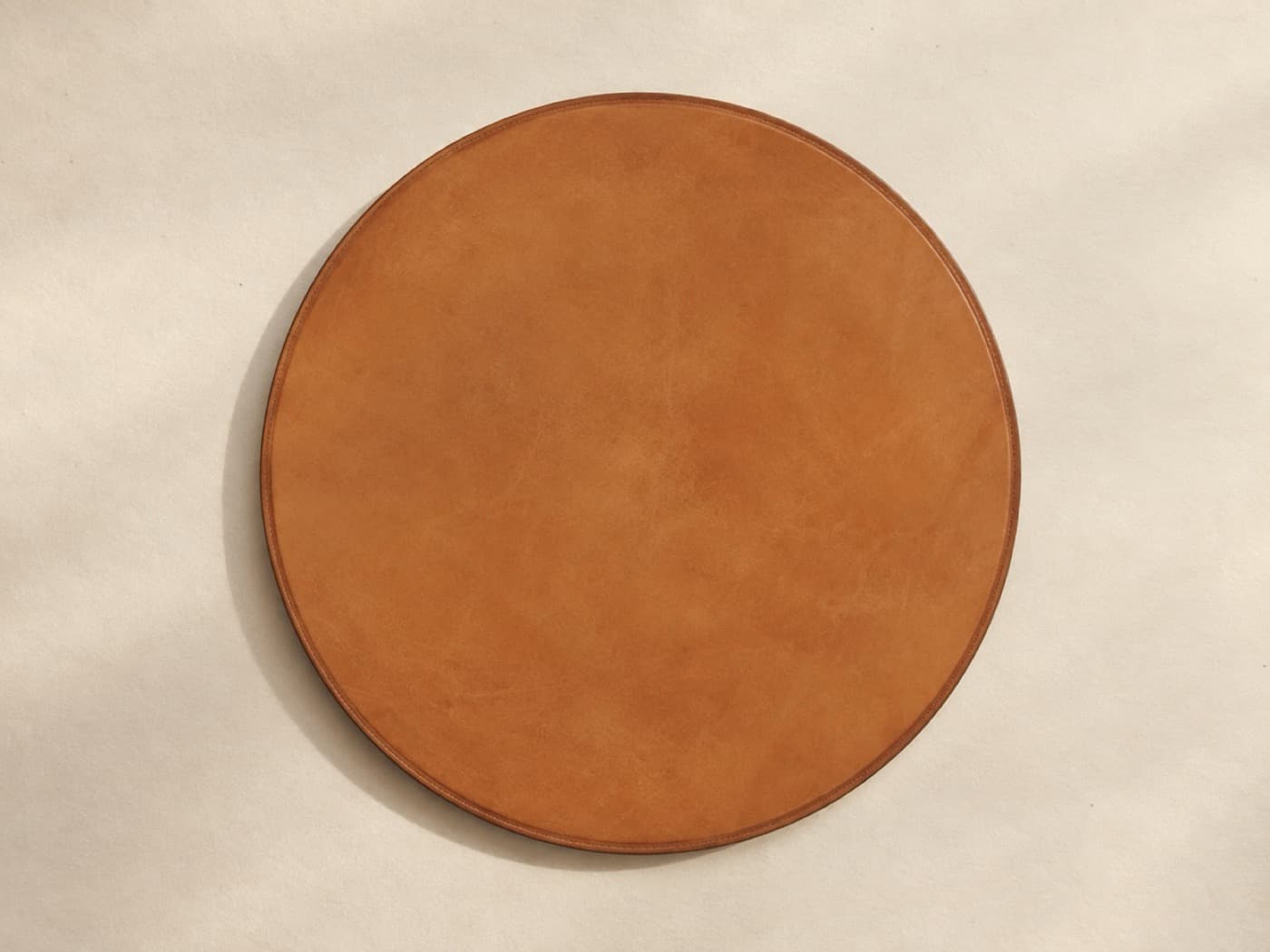
05For round tables and corner workstations, where a rectangle always sits wrong.
 06
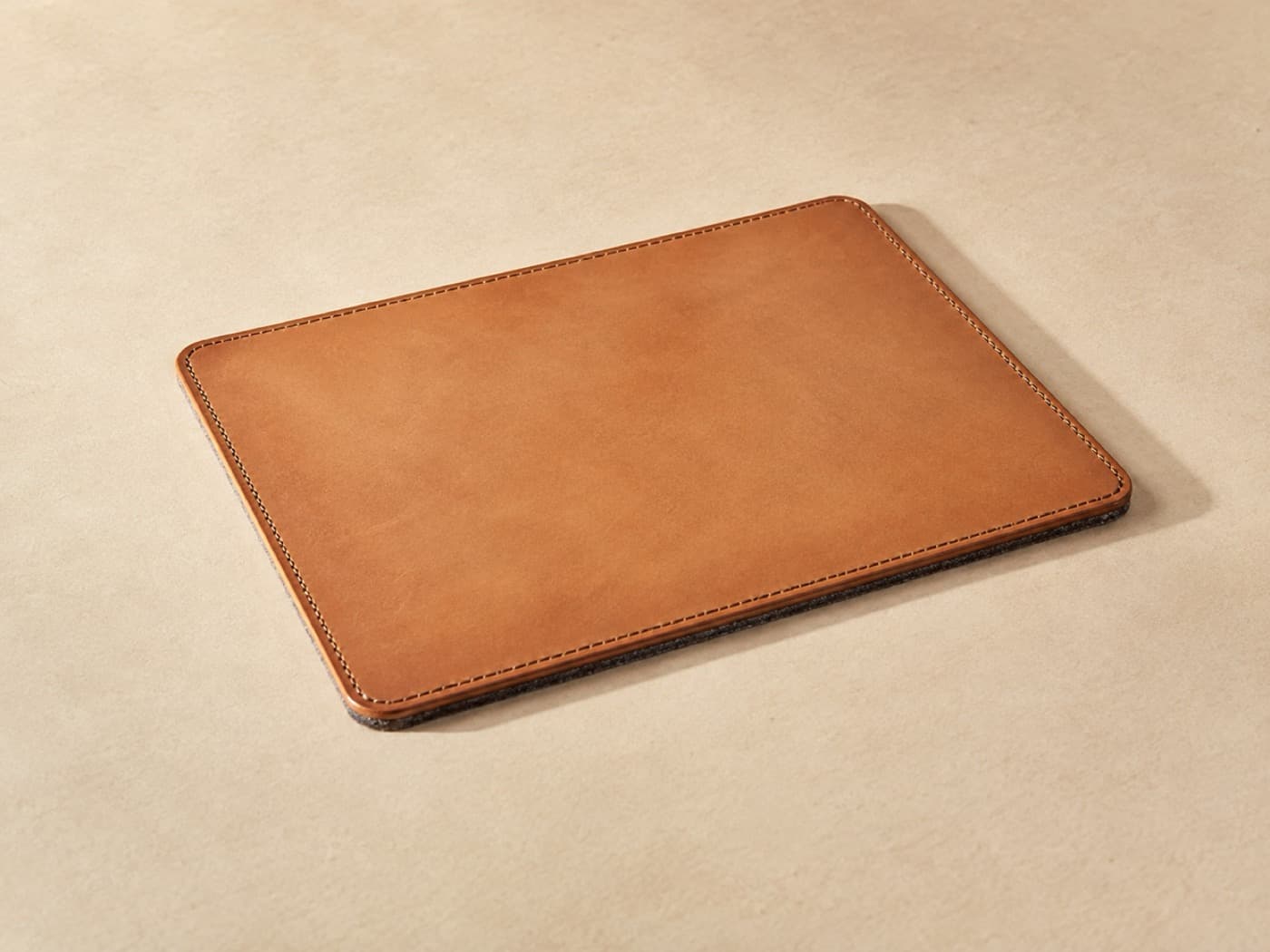
06A small second plane, for when the main mat stops short of the working hand.
 07
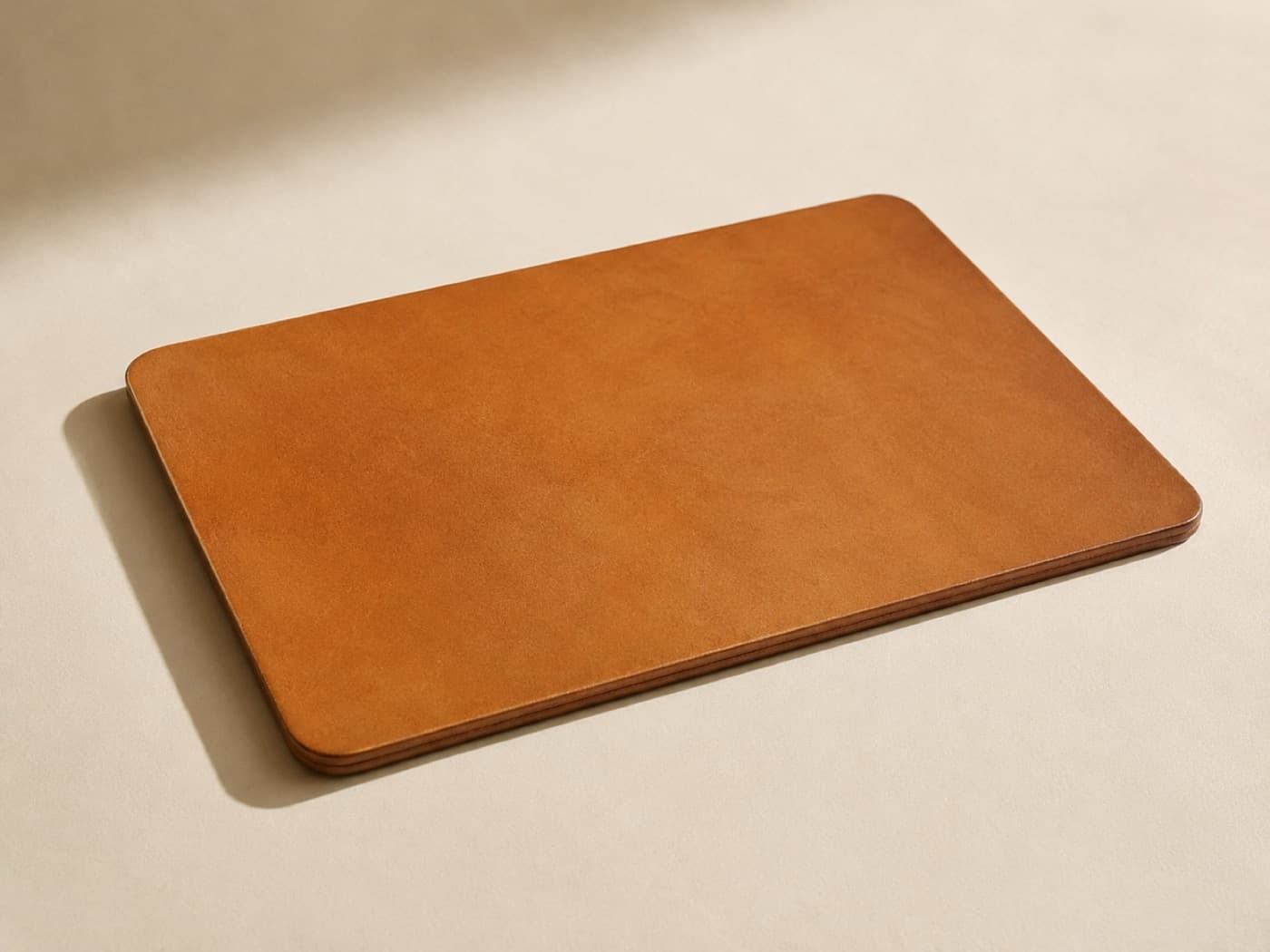
07The wider cut, with room for the wrist to land as well as the hand.
 08
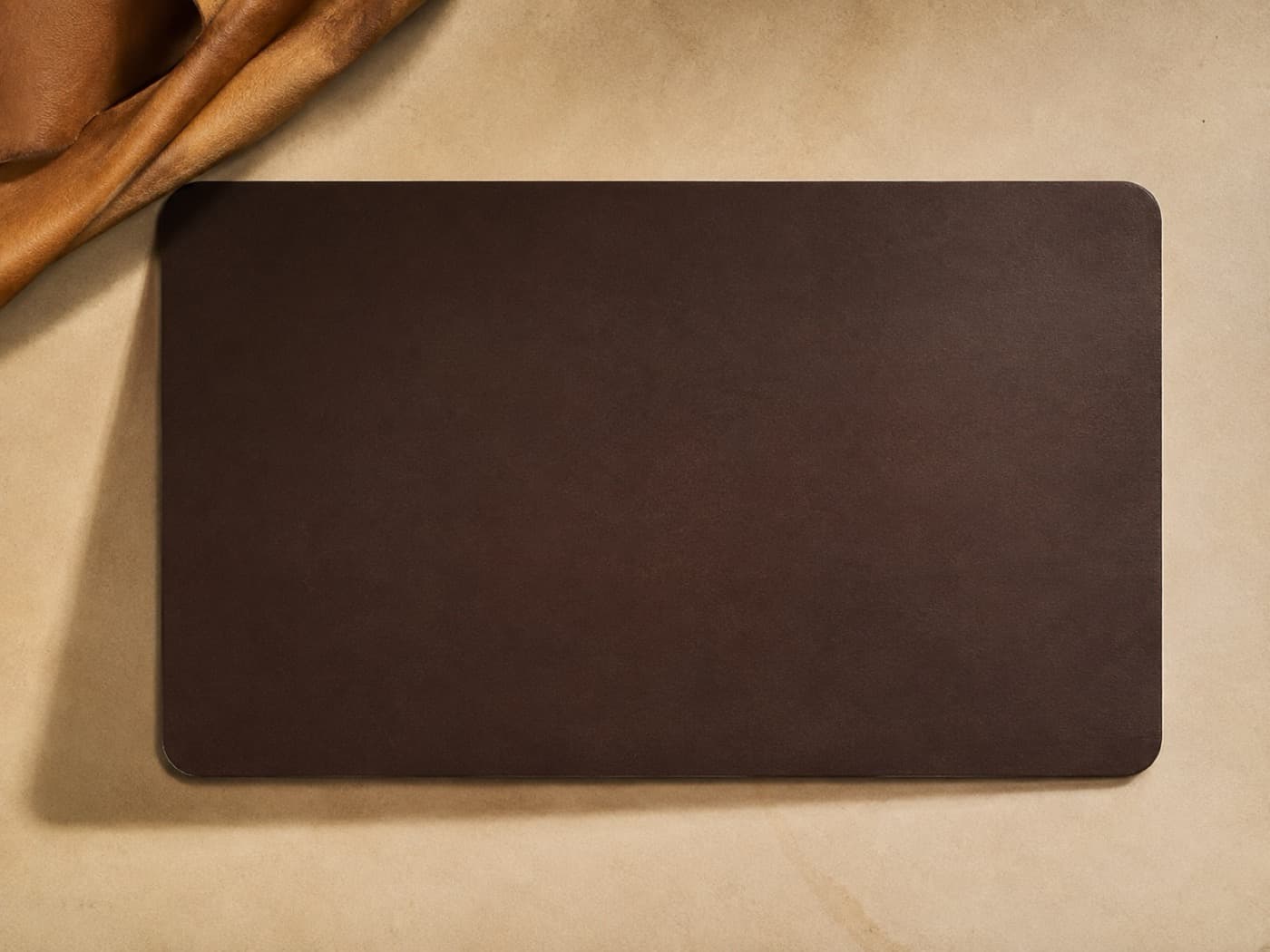
08Bonded leather fibre in the standard size. A different material, priced and labelled as one.
Line II · Schalen & Ablagen
Flat leather that becomes a container when you fasten its corners. Nothing is moulded, nothing is glued — the shape is held by four studs and the stiffness of the hide.
Open this line on its own page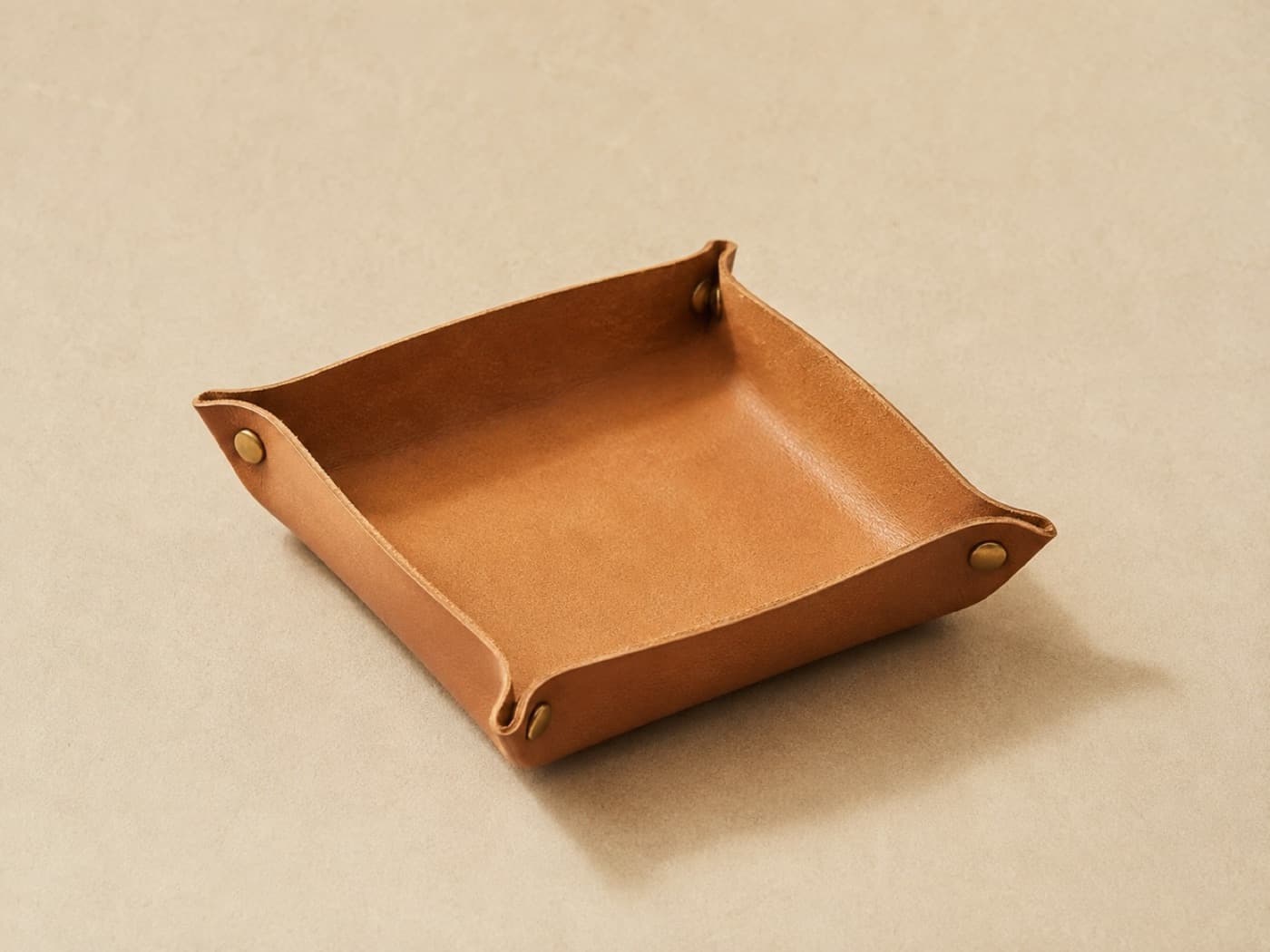 09
09Four corners, four studs. Ships flat, becomes a tray in about five seconds.
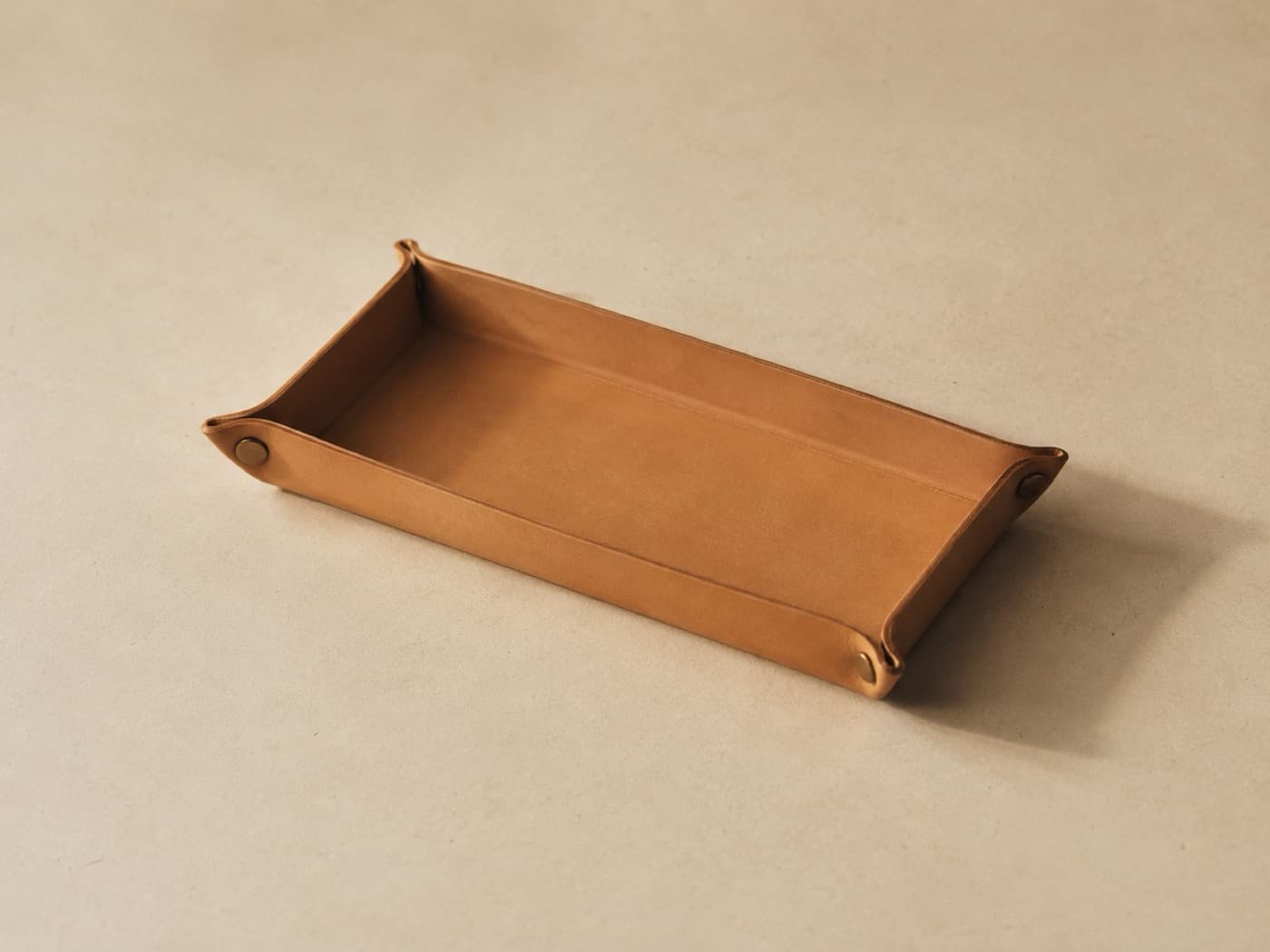 10
10The long format, for the strip of desk behind the mat.
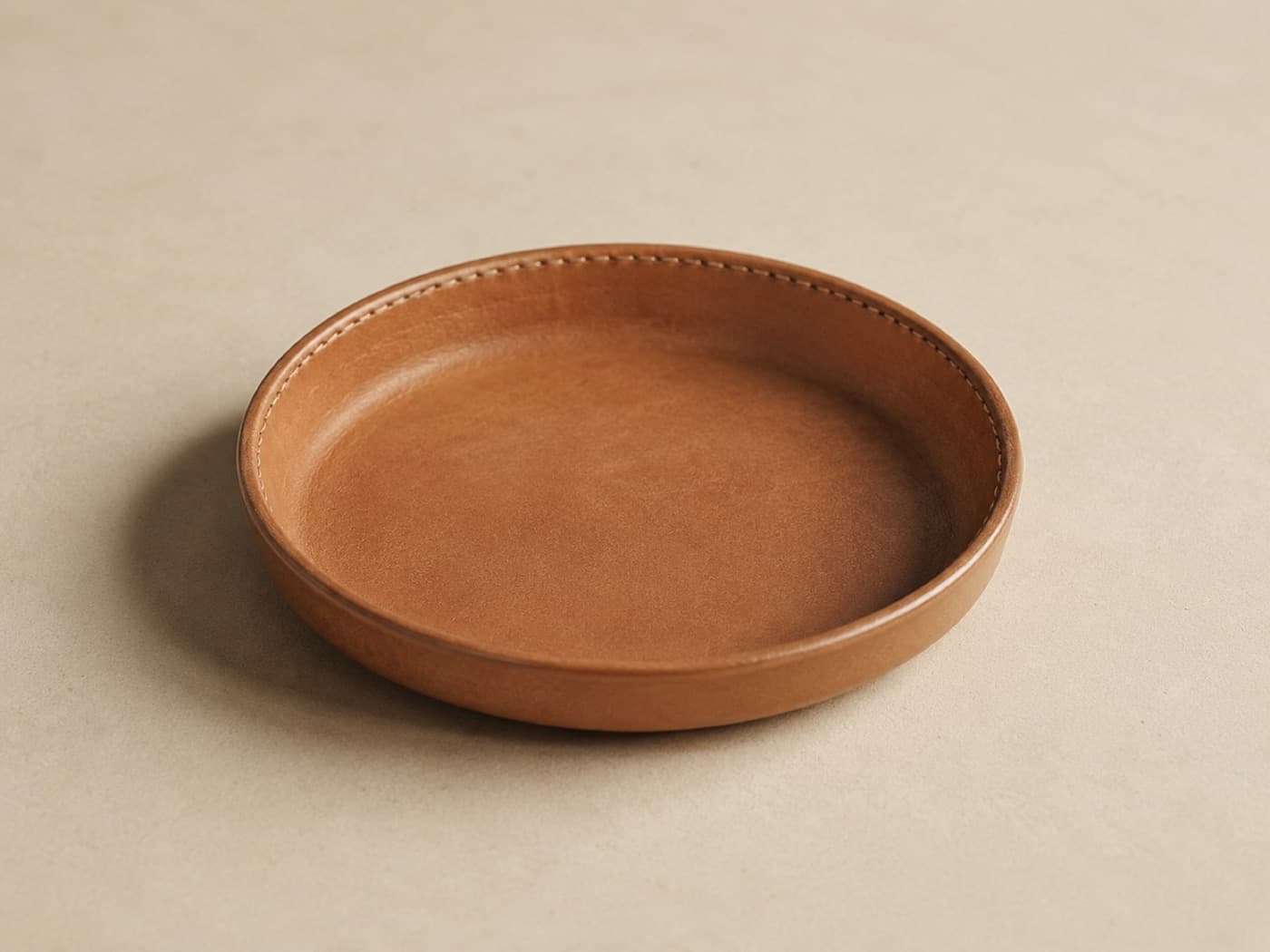 11
11Wet-moulded rather than snapped. One continuous rim, no corners at all.
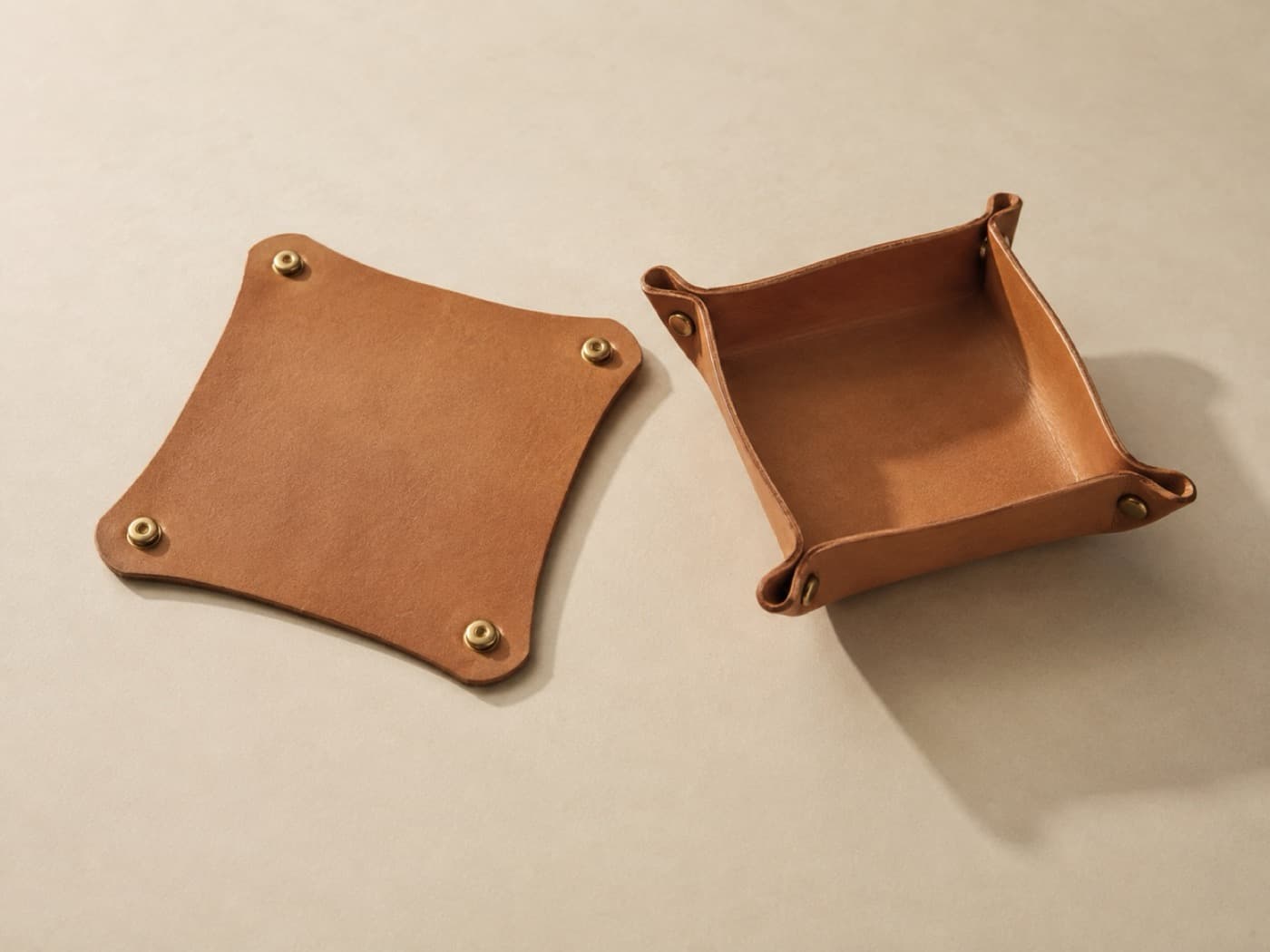 12
12Ships as a flat square in a letter-format envelope. You fasten the corners.
 13
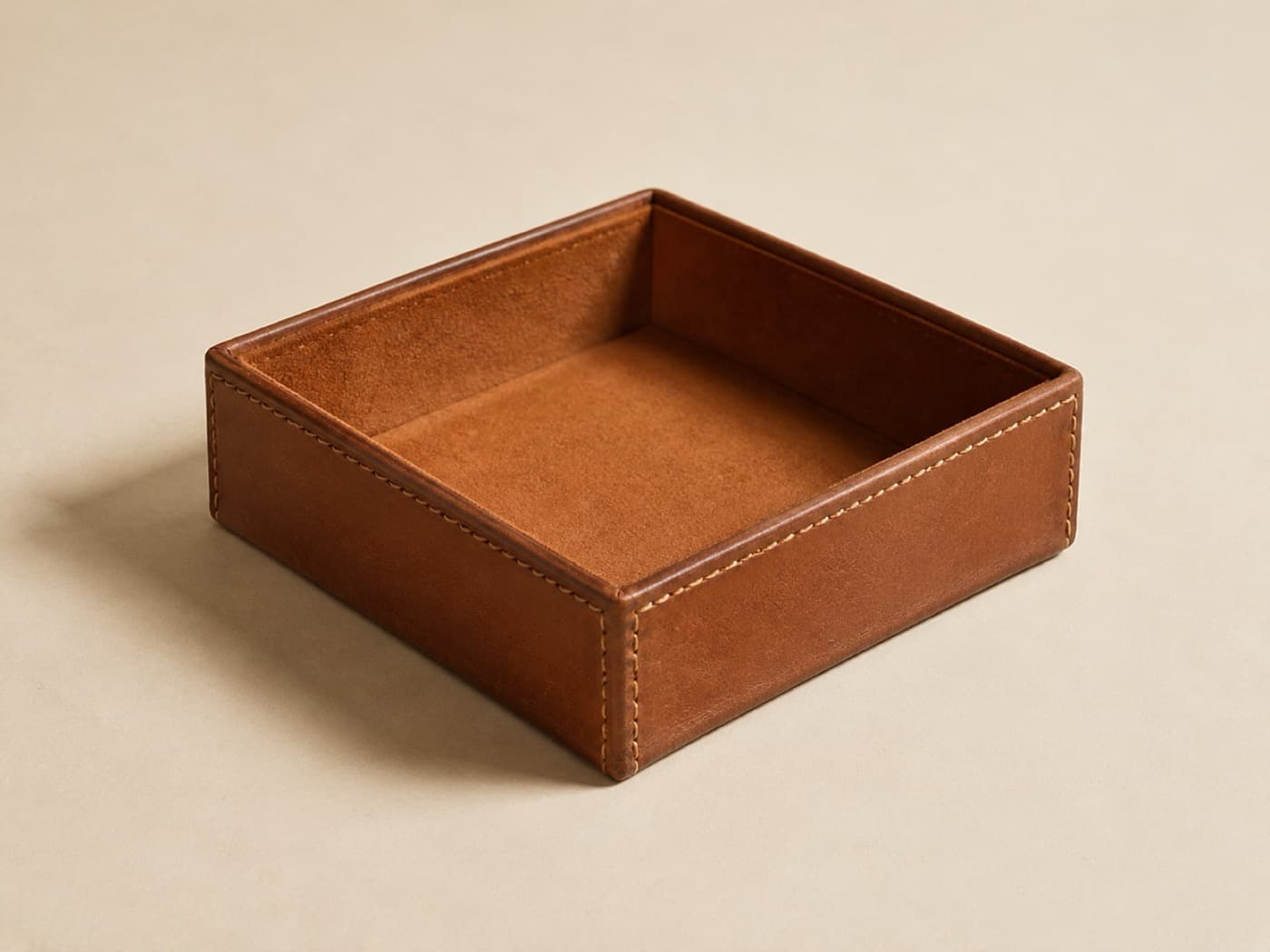
13Deep walls, stitched corners. For the things that should not be visible from a standing height.
 14
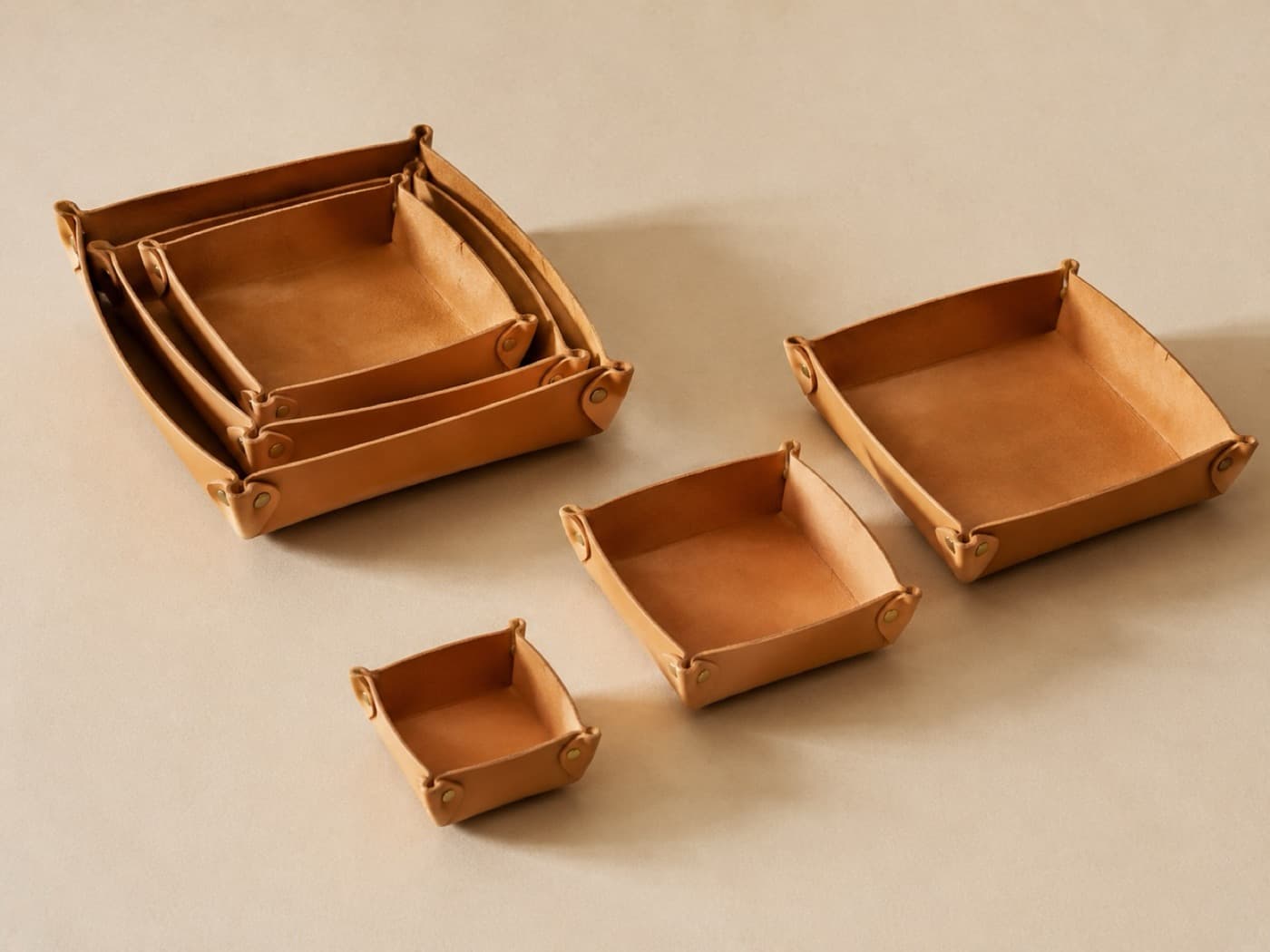
14Three sizes that stack into one another flat, or spread across the desk as three.
 15
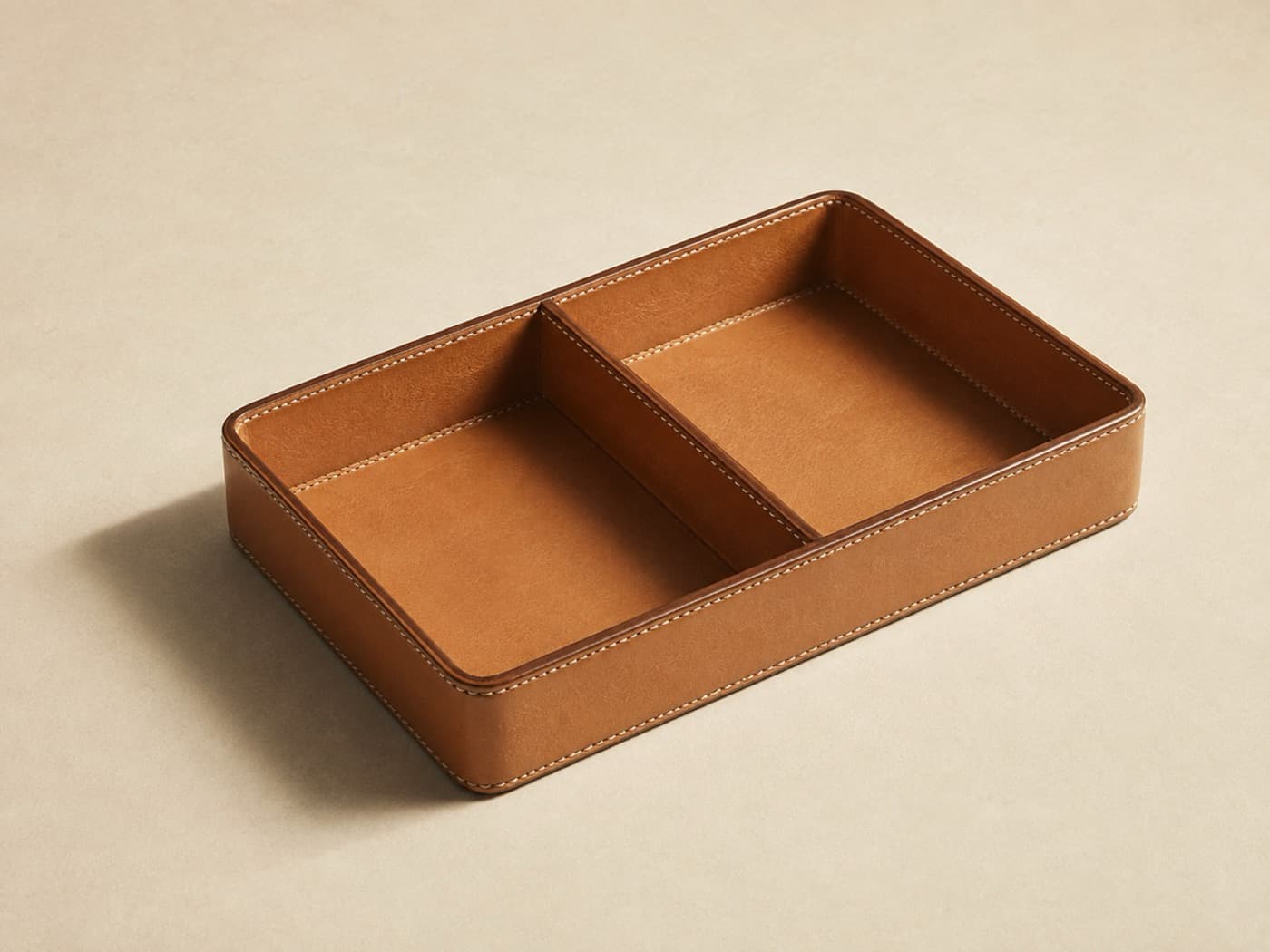
15Two compartments, one stitched wall between them. Made for the nightstand, useful on a desk.
 16
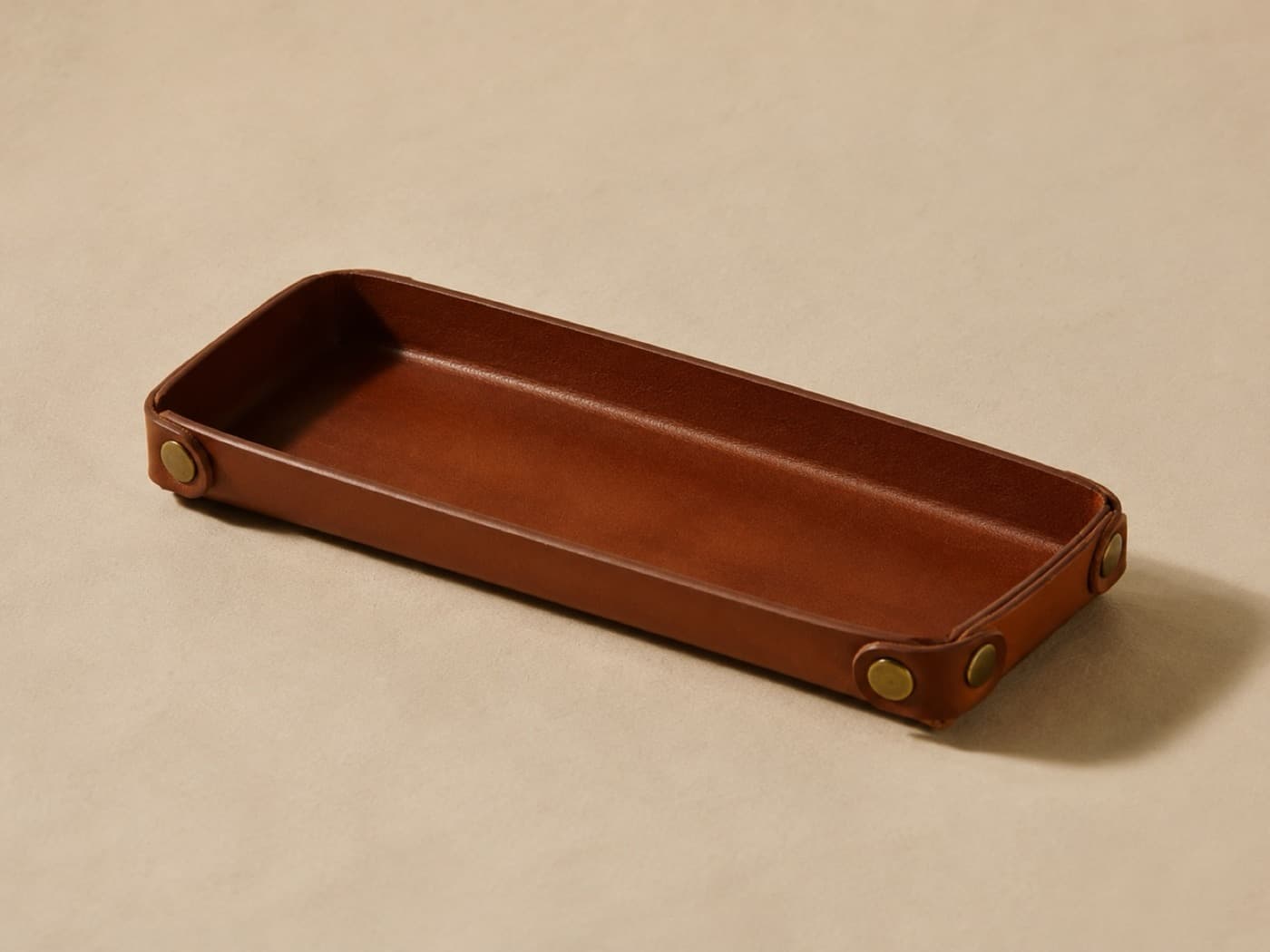
16The long one by the door. Everything that comes out of a pocket lands here.
Line III · Untersetzer & Tischsets
Pads that go between the table and the glass. They are underlays for tableware, not surfaces for food, and every page here says so plainly.
Open this line on its own page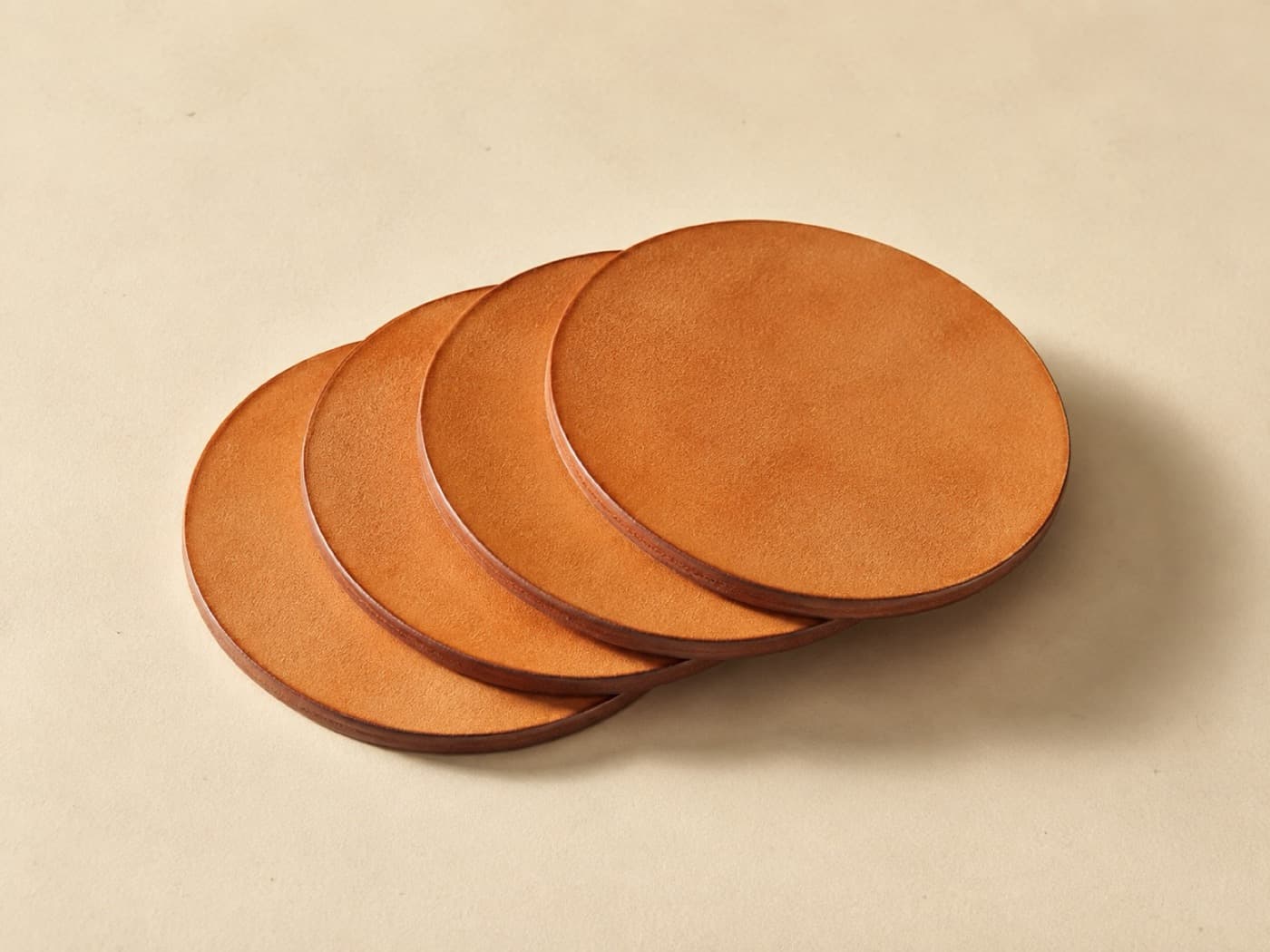 17
17Four discs at 4 mm — thick enough that the edge is the whole design.
Underlay for tableware — not intended for direct food contact.
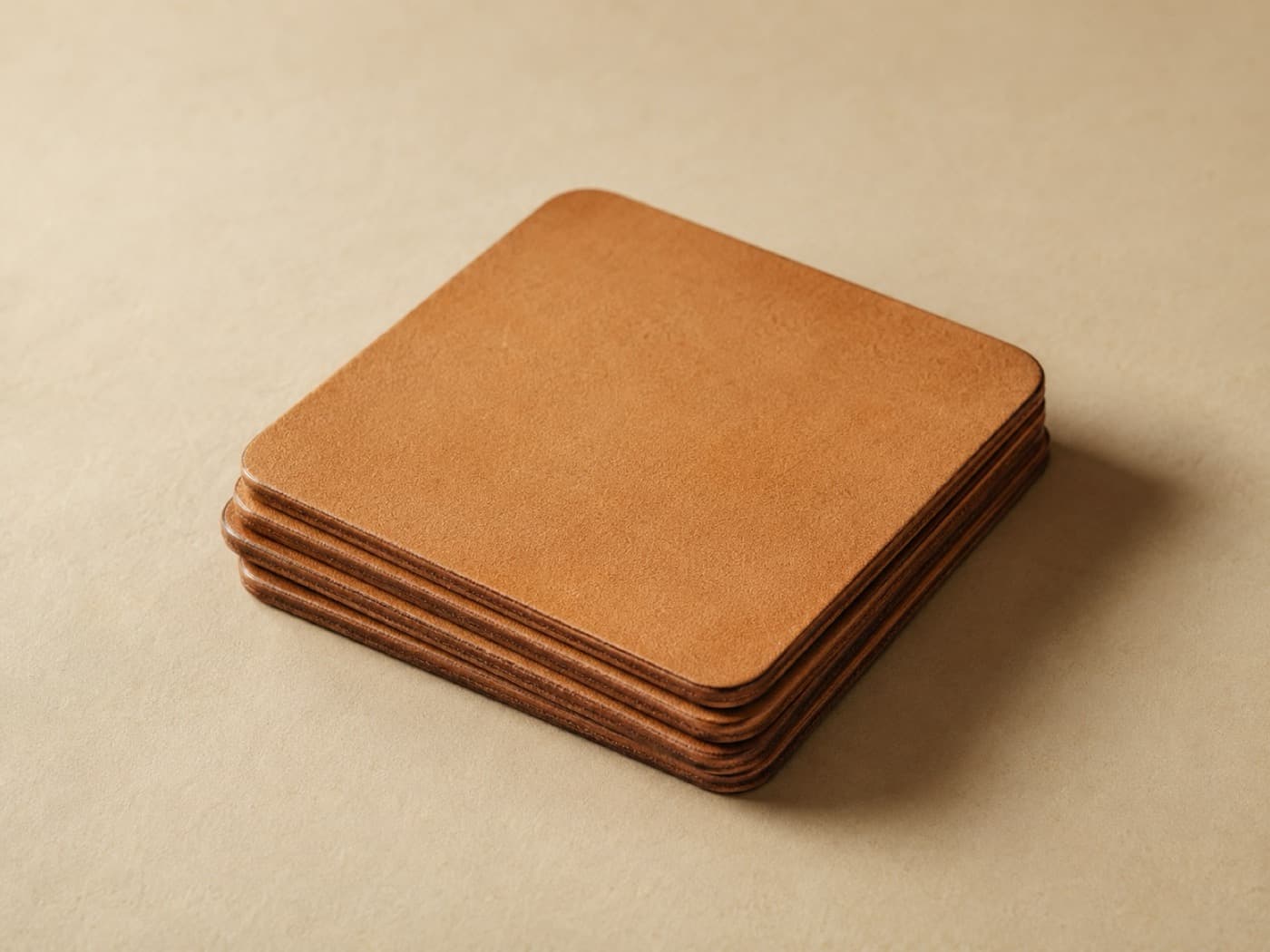 18
18The same 4 mm stock, cut square with a 3 mm corner radius.
Underlay for tableware — not intended for direct food contact.
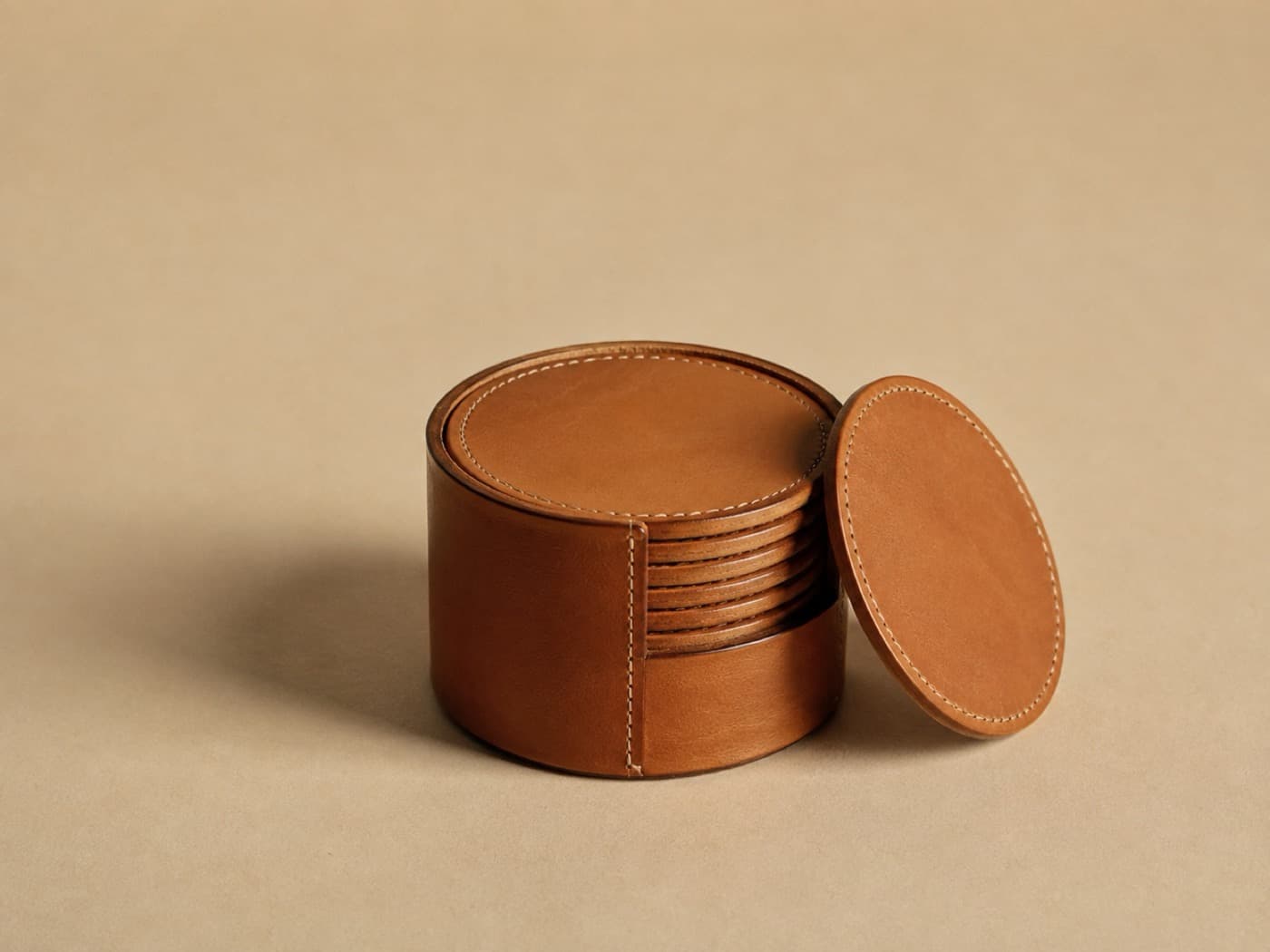 19
19Six discs and a stitched cylinder to keep them in one column.
Underlay for tableware — not intended for direct food contact.
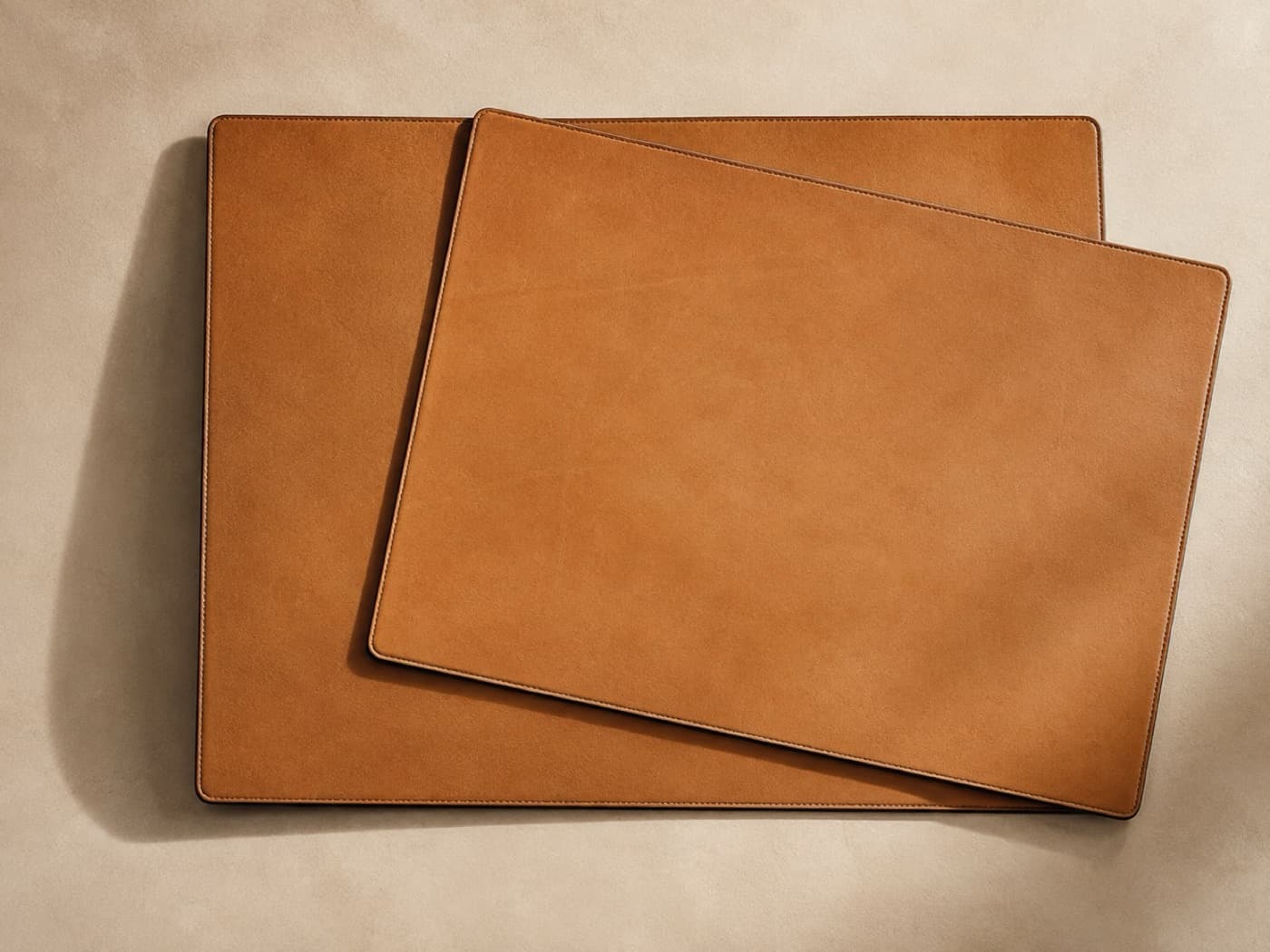 20
20Two mats at the standard European cover size. Plate and cutlery go on top.
Underlay for tableware — not intended for direct food contact.
 21
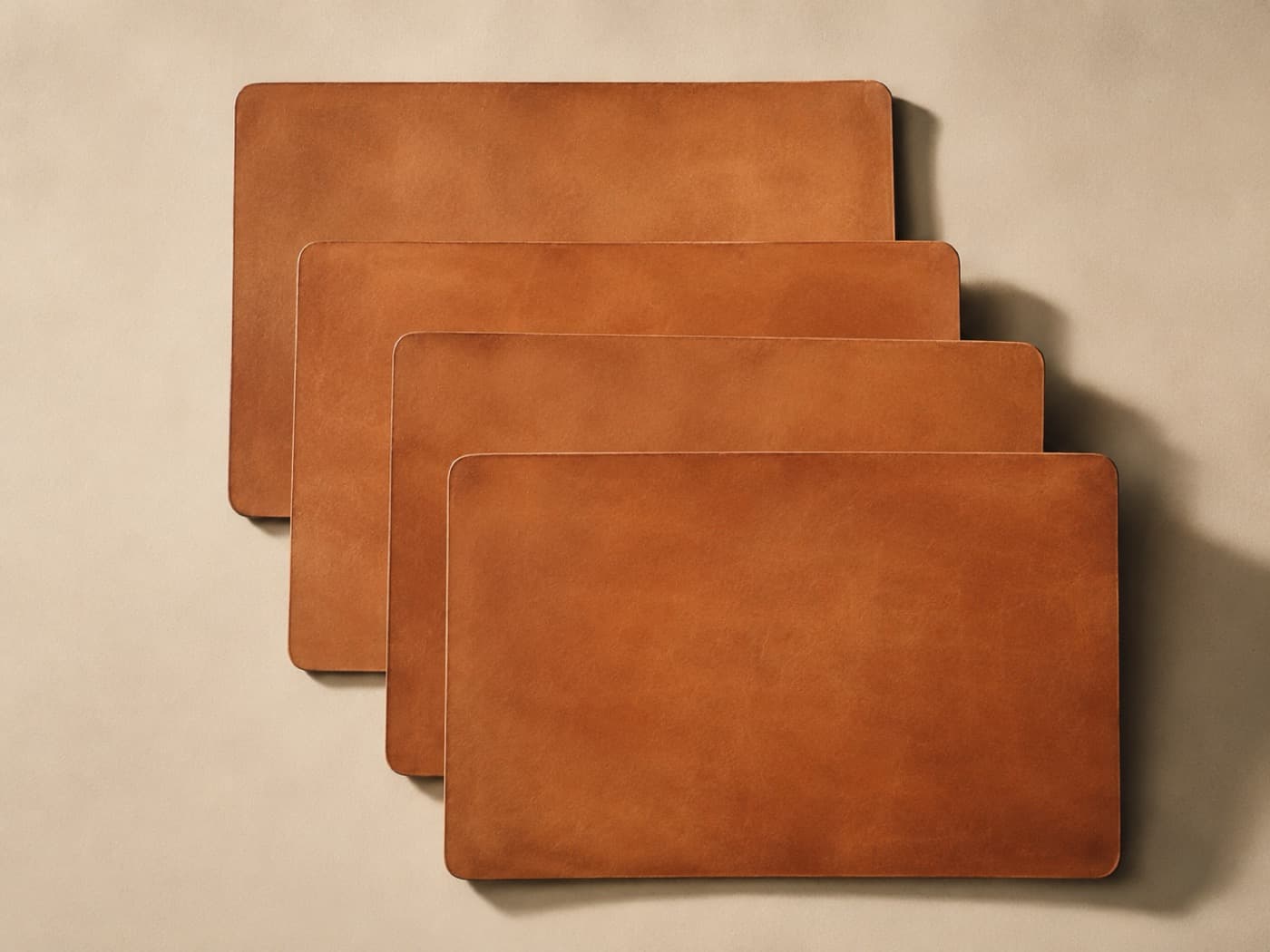
21The full table. Four mats cut from adjacent panels so they age at the same rate.
Underlay for tableware — not intended for direct food contact.
 22
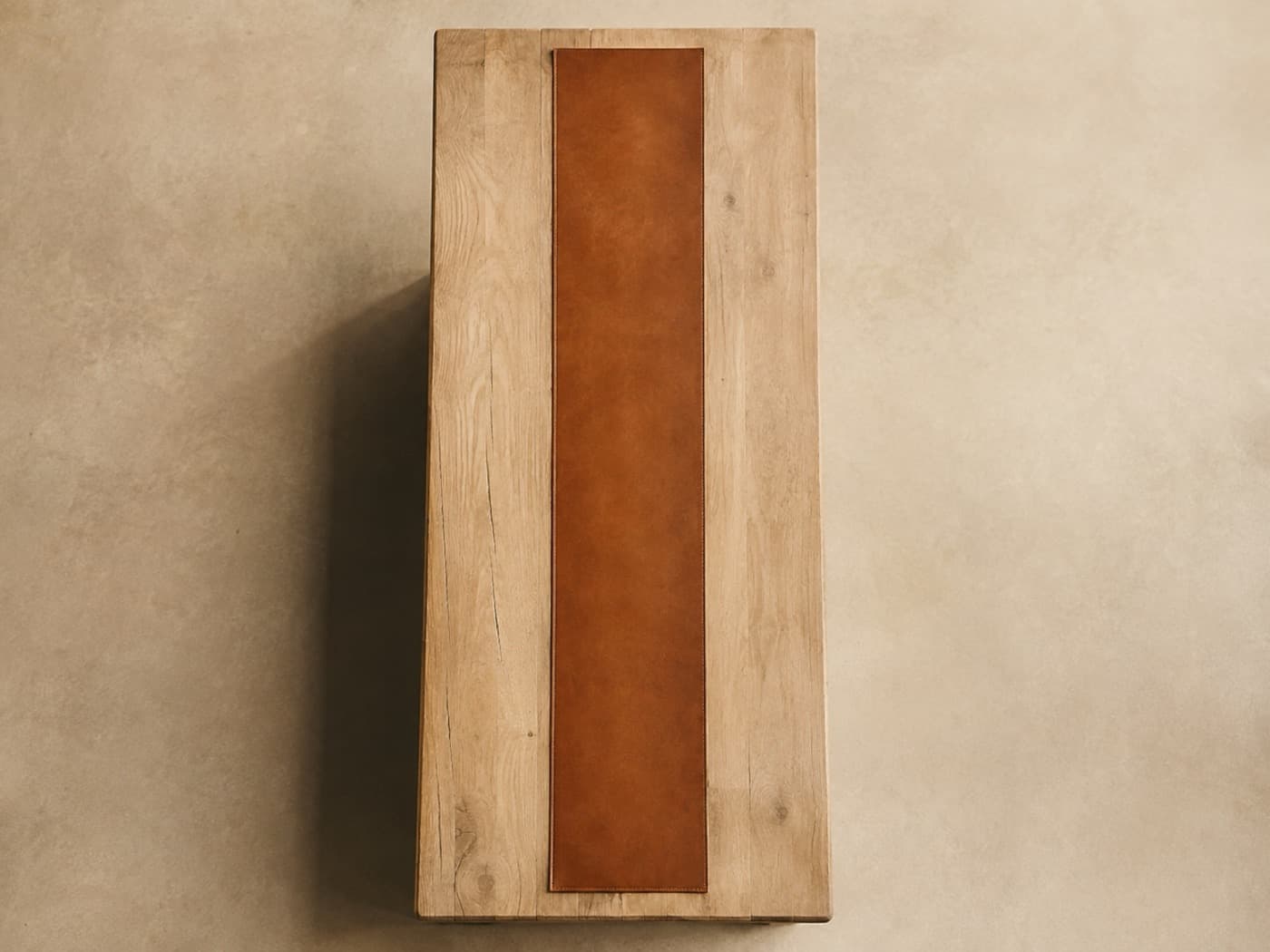
22A single strip down the centre of the table. Nothing else required.
Underlay for tableware — not intended for direct food contact.
 23
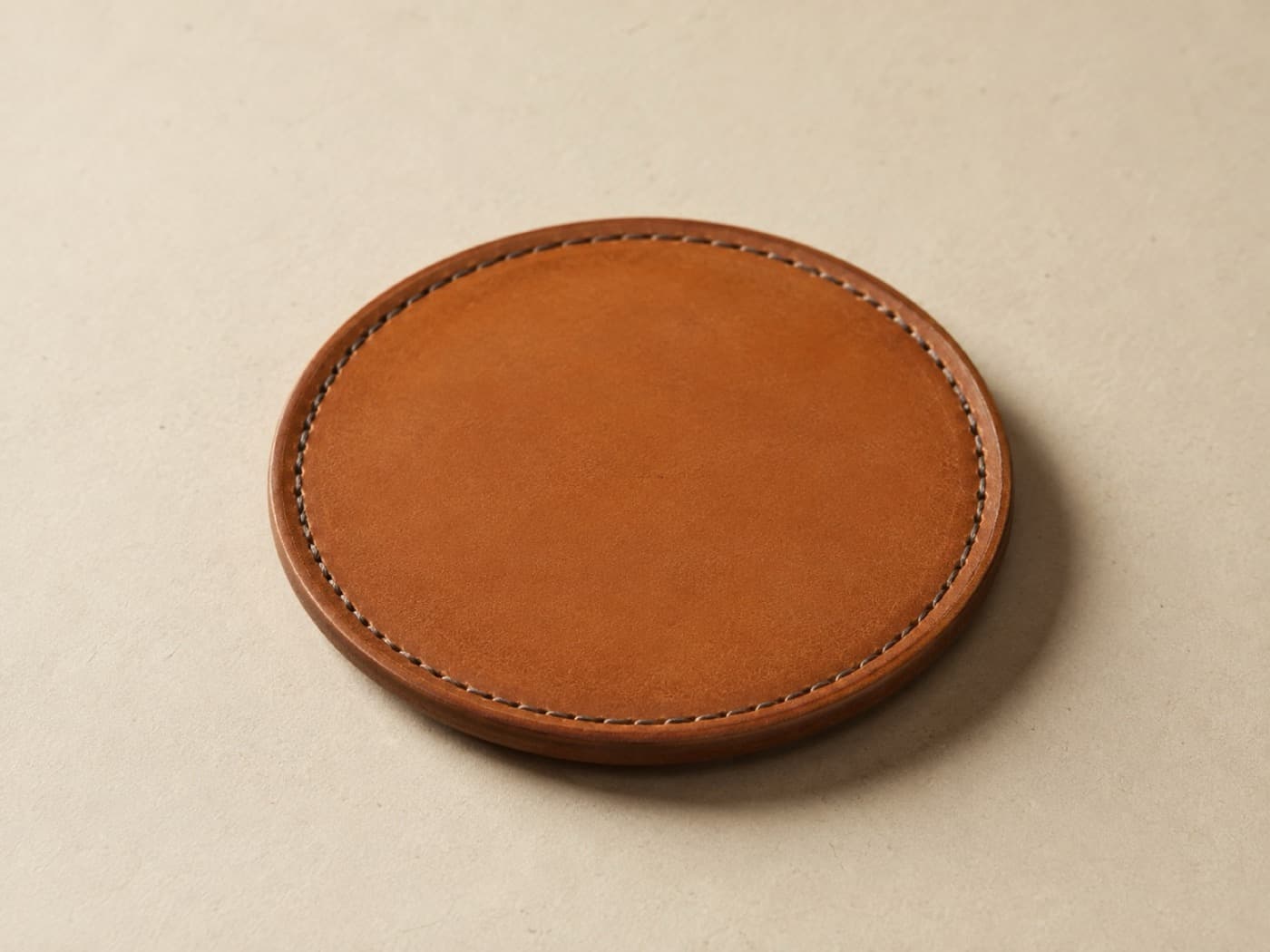
23A moulded disc with a low rim, for the bottle that sweats on a wooden table.
Underlay for tableware — not intended for direct food contact.
Line IV · Hüllen & Mappen
Covers for the paper already on the desk. Refillable, flat, and without a single handle or strap — these stay where the desk is.
Open this line on its own page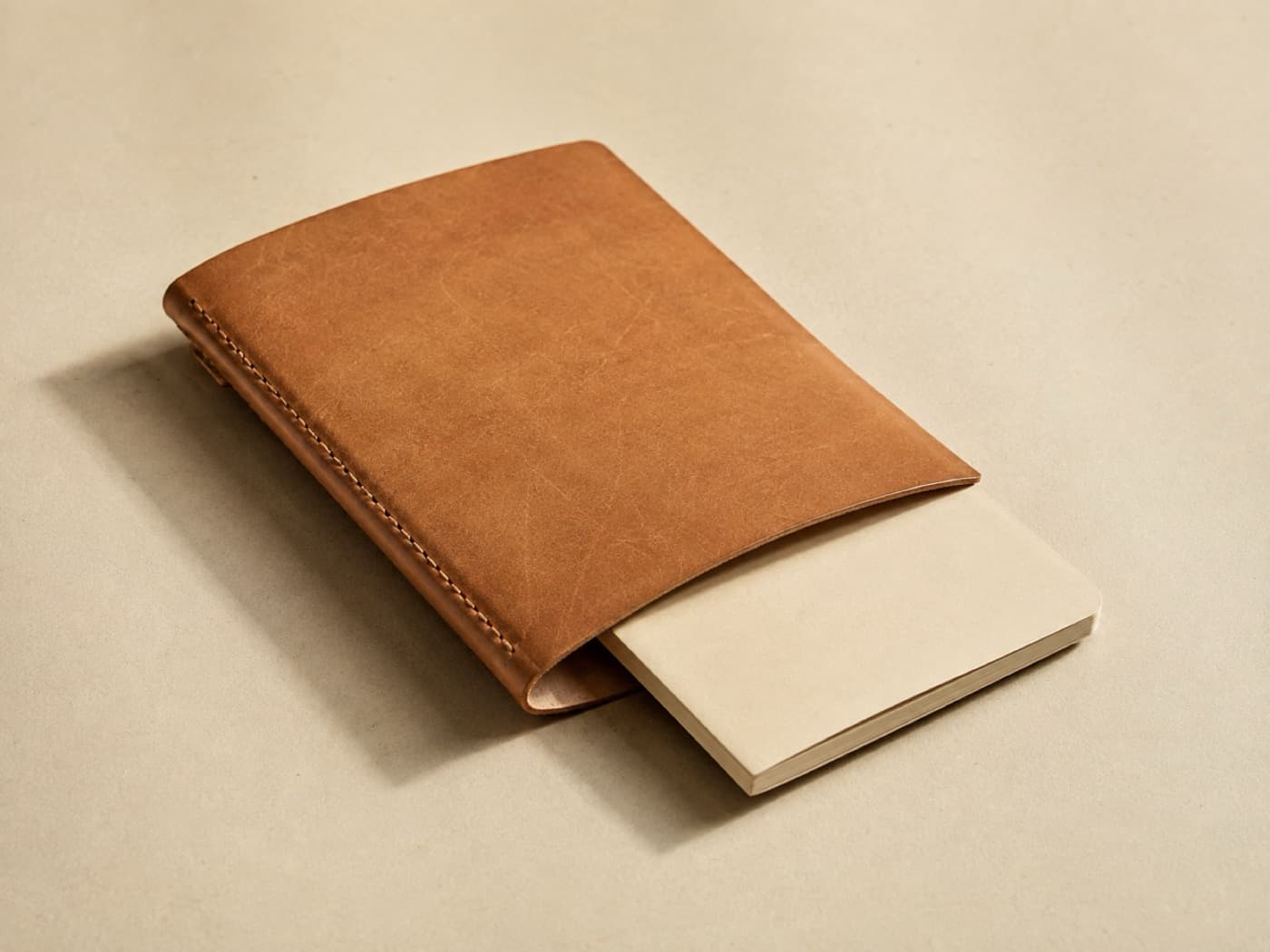 24
24One cover, an indefinite number of notebooks. Ships with the first insert.
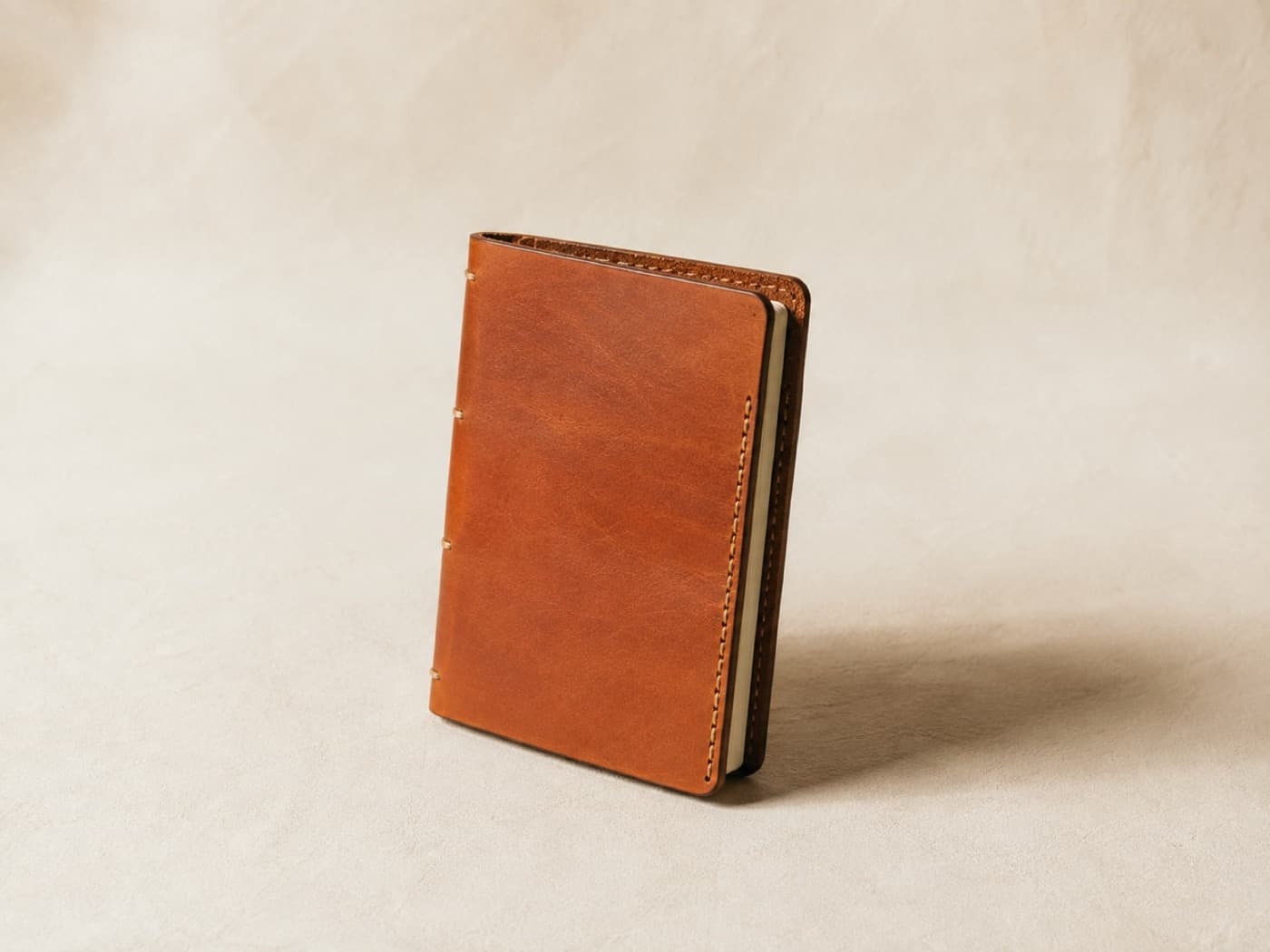 25
25The small format, for the notebook that lives beside the phone charger and never leaves the room.
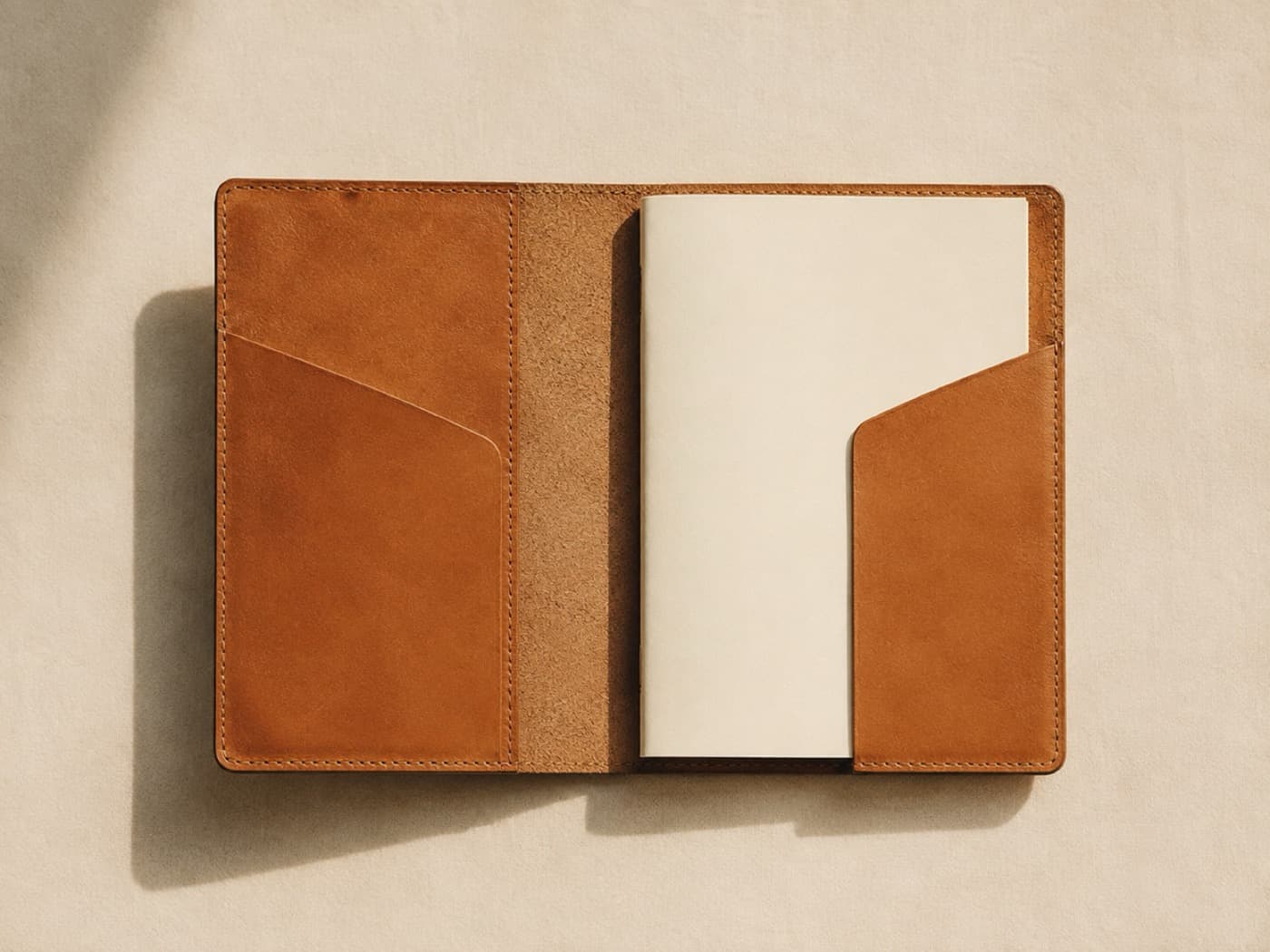 26
26The large format that opens flat and stays open — for drawing as much as writing.
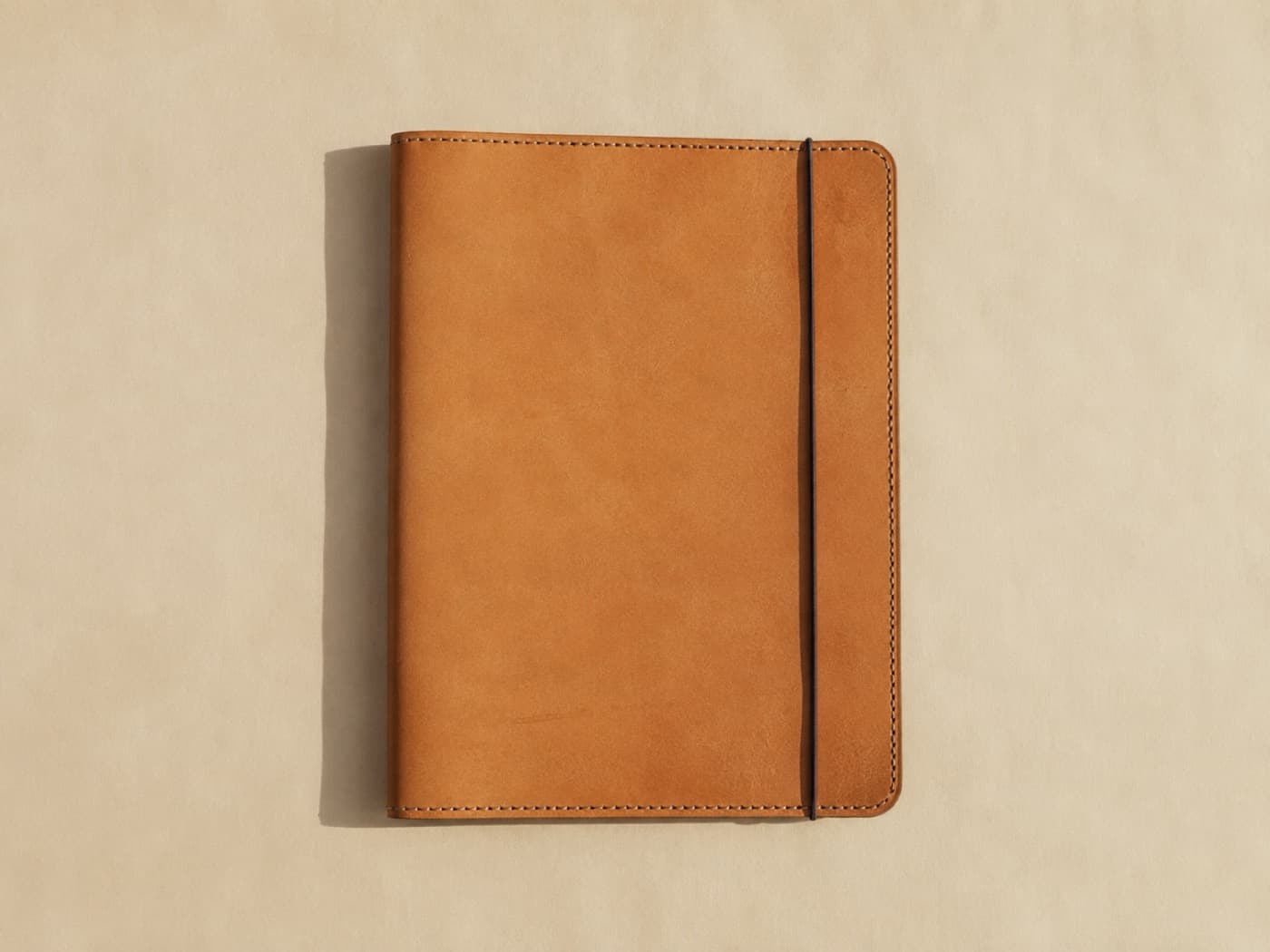 27
27A flat A4 folio with no handle and no strap. It belongs to the desk, not to a commute.
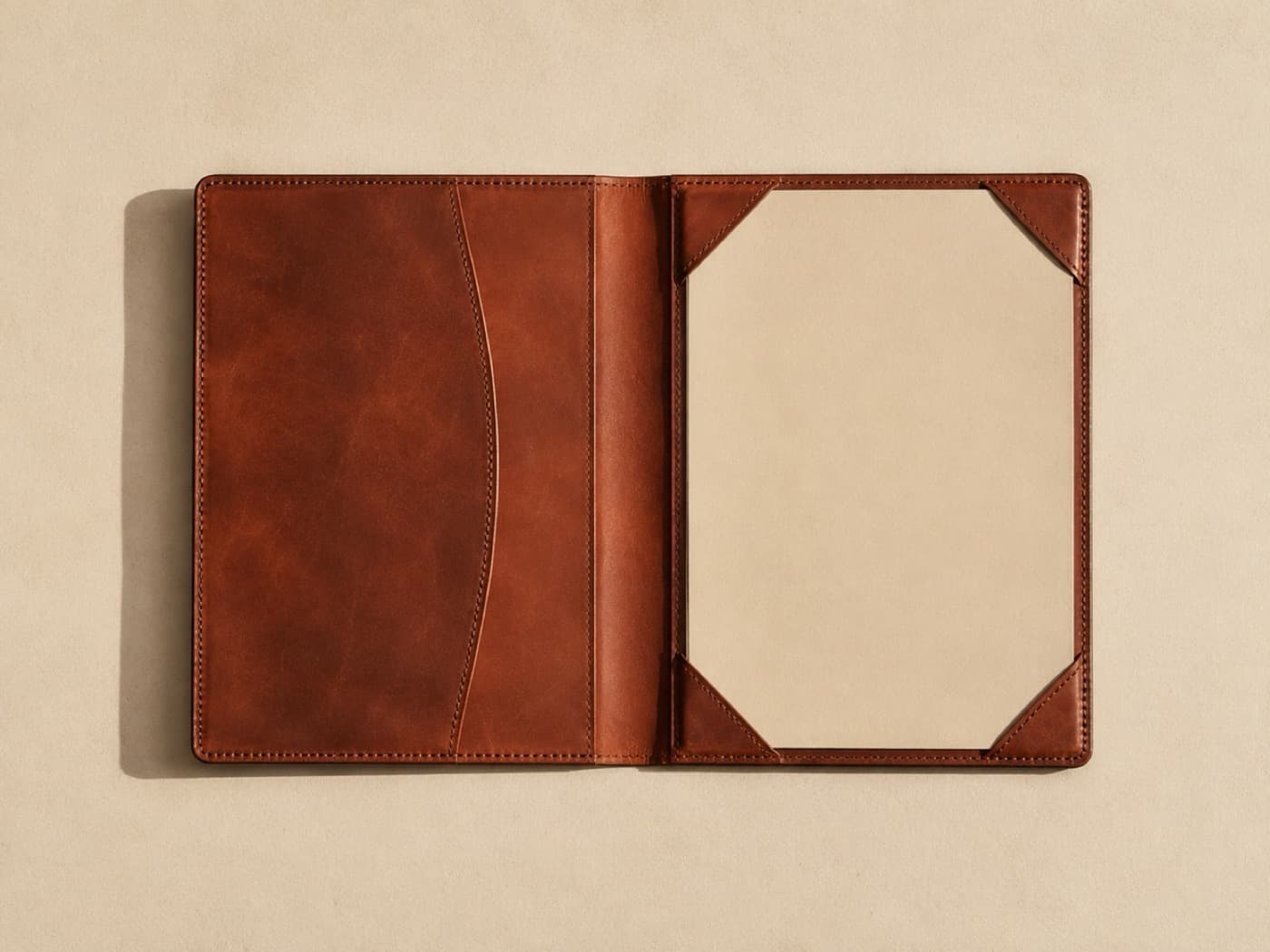 28
28For studios and dining rooms that hand a printed page to someone. Corner straps, no glue.
 29
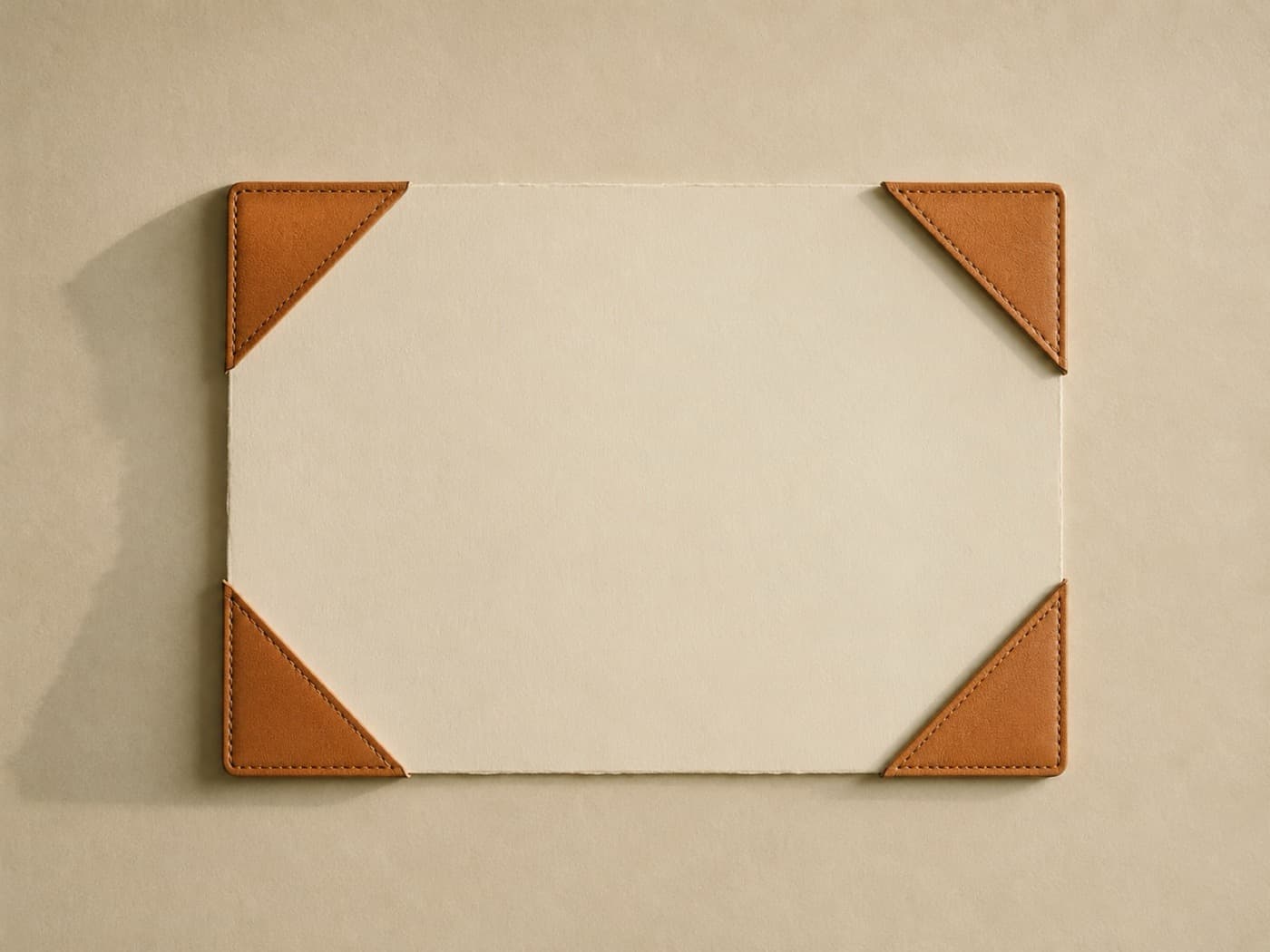
29Four corners that turn a sheet of blotting paper into a desk pad. The oldest idea here.
 30
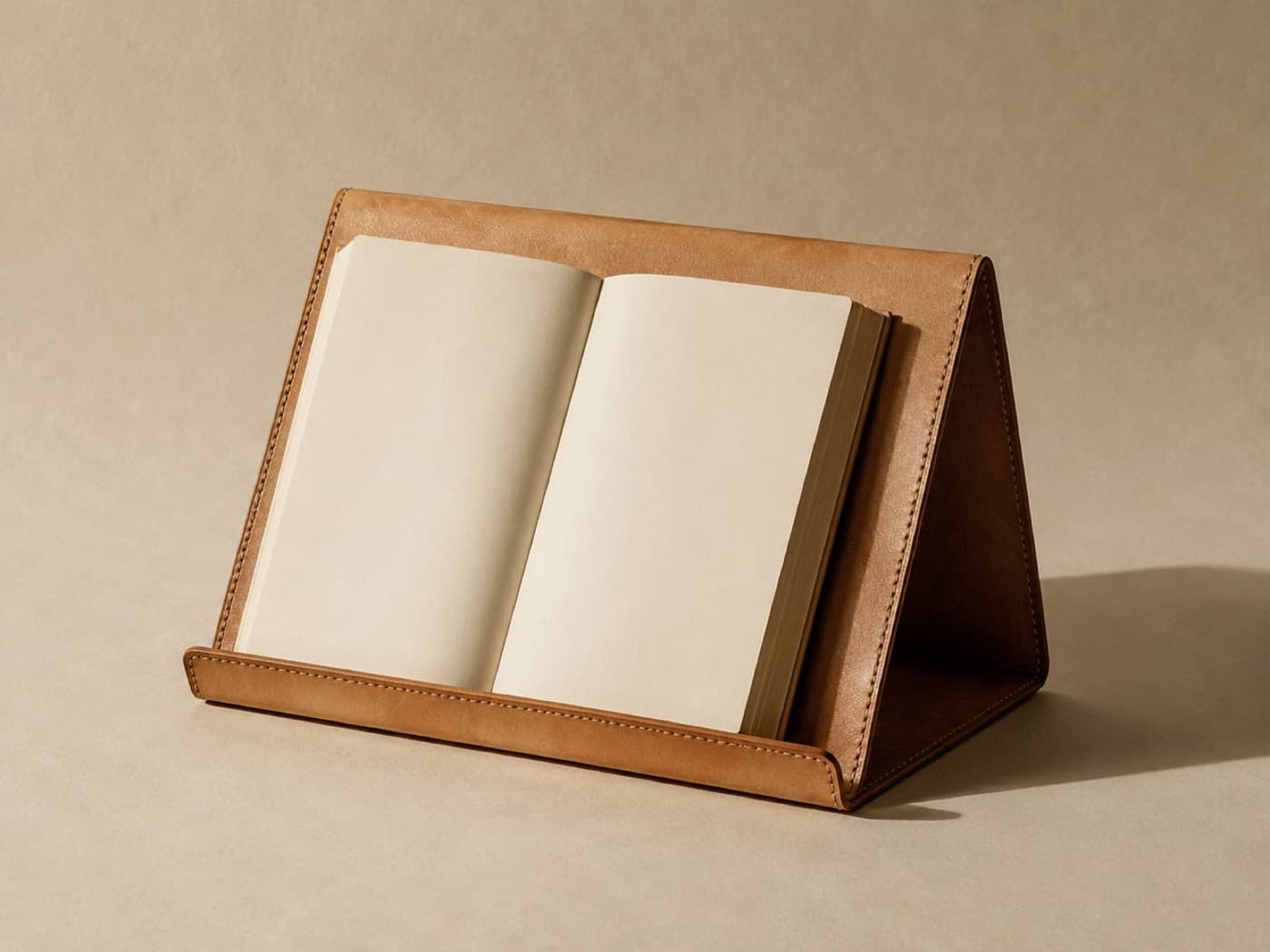
30Folds into a wedge and holds a book open at reading angle. Unfolds flat to store.
Line V · Schreibtisch-Ordnung
Cups, channels and straps for the things that would otherwise roll. Passive leather only — nothing here carries current, heats up or charges anything.
Open this line on its own page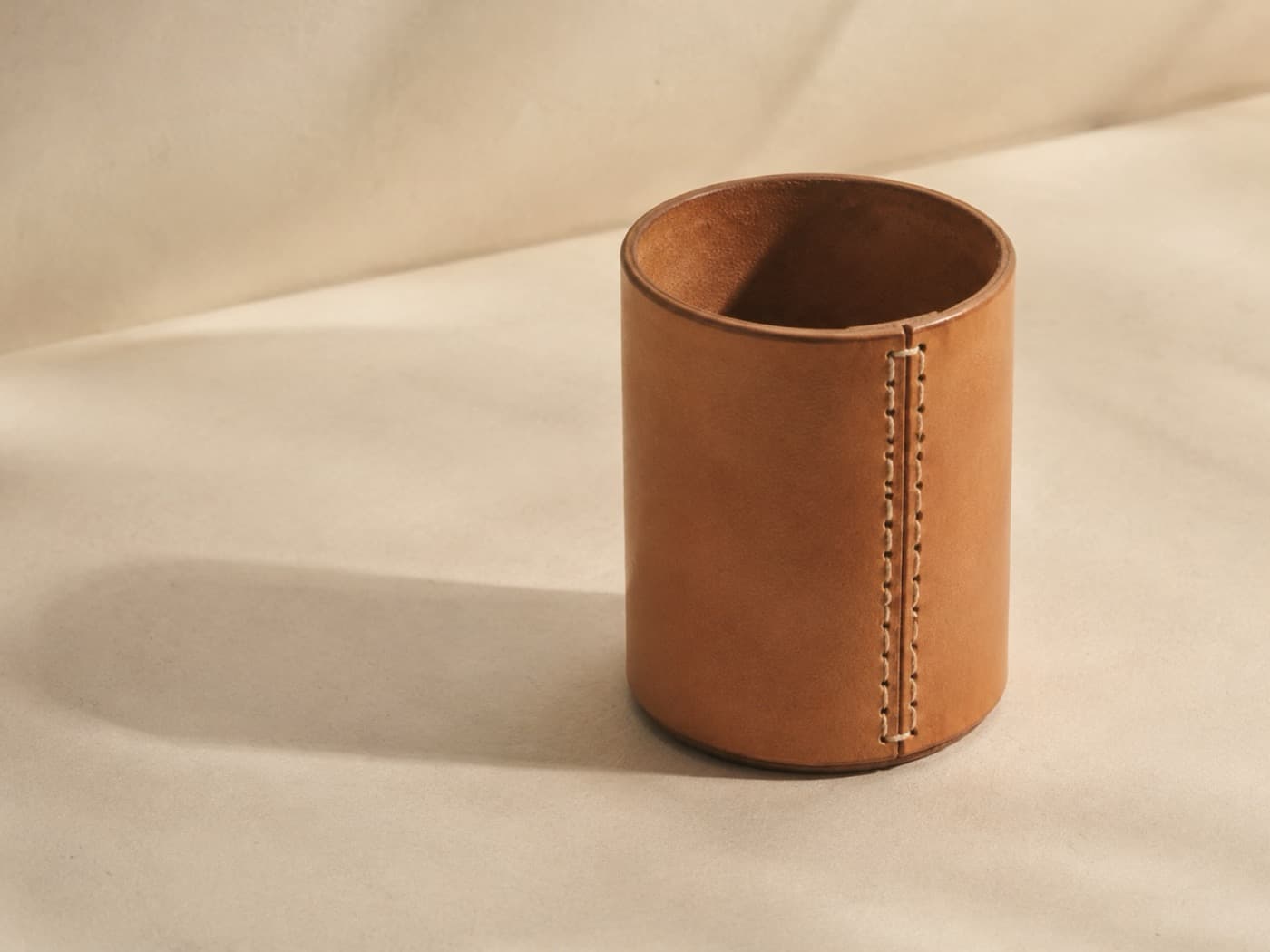 31
31A wrapped cylinder with one visible seam. Stands on its own stiffness.
 32
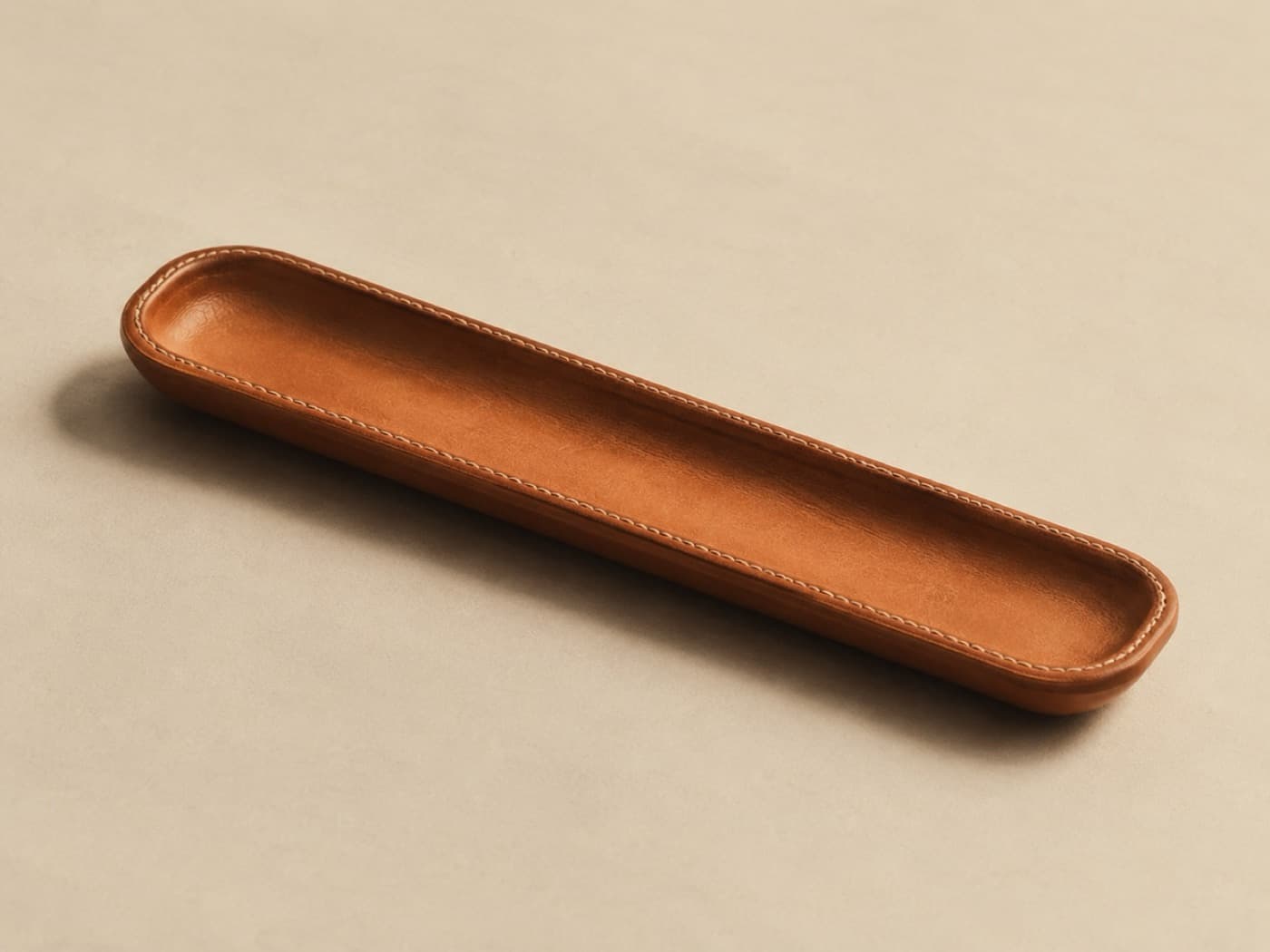
32A shallow moulded channel. For people who would rather lay pens down than stand them up.
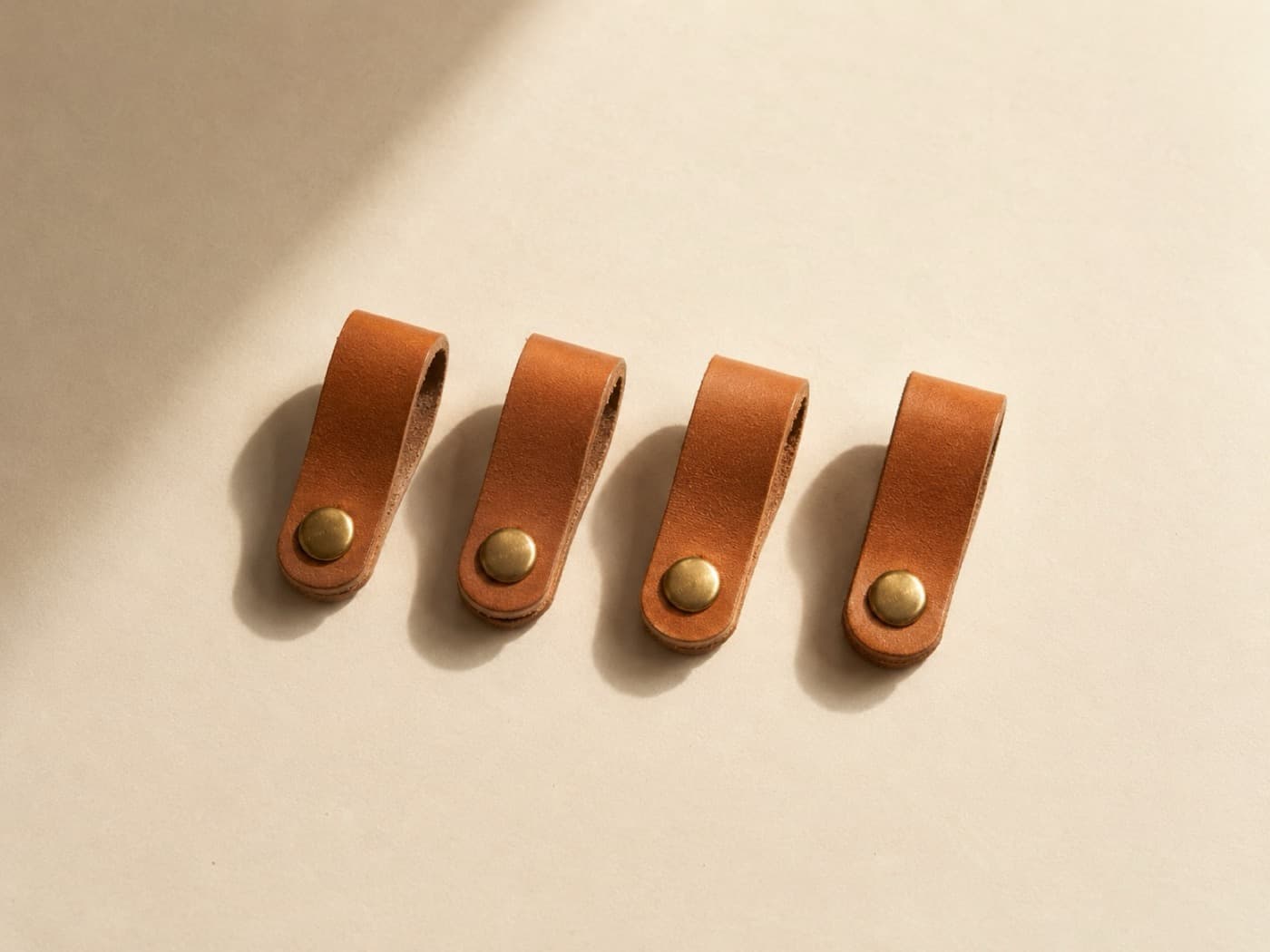 33
33Four snapped straps that keep a loose cord from sliding off the desk edge. Passive leather only.
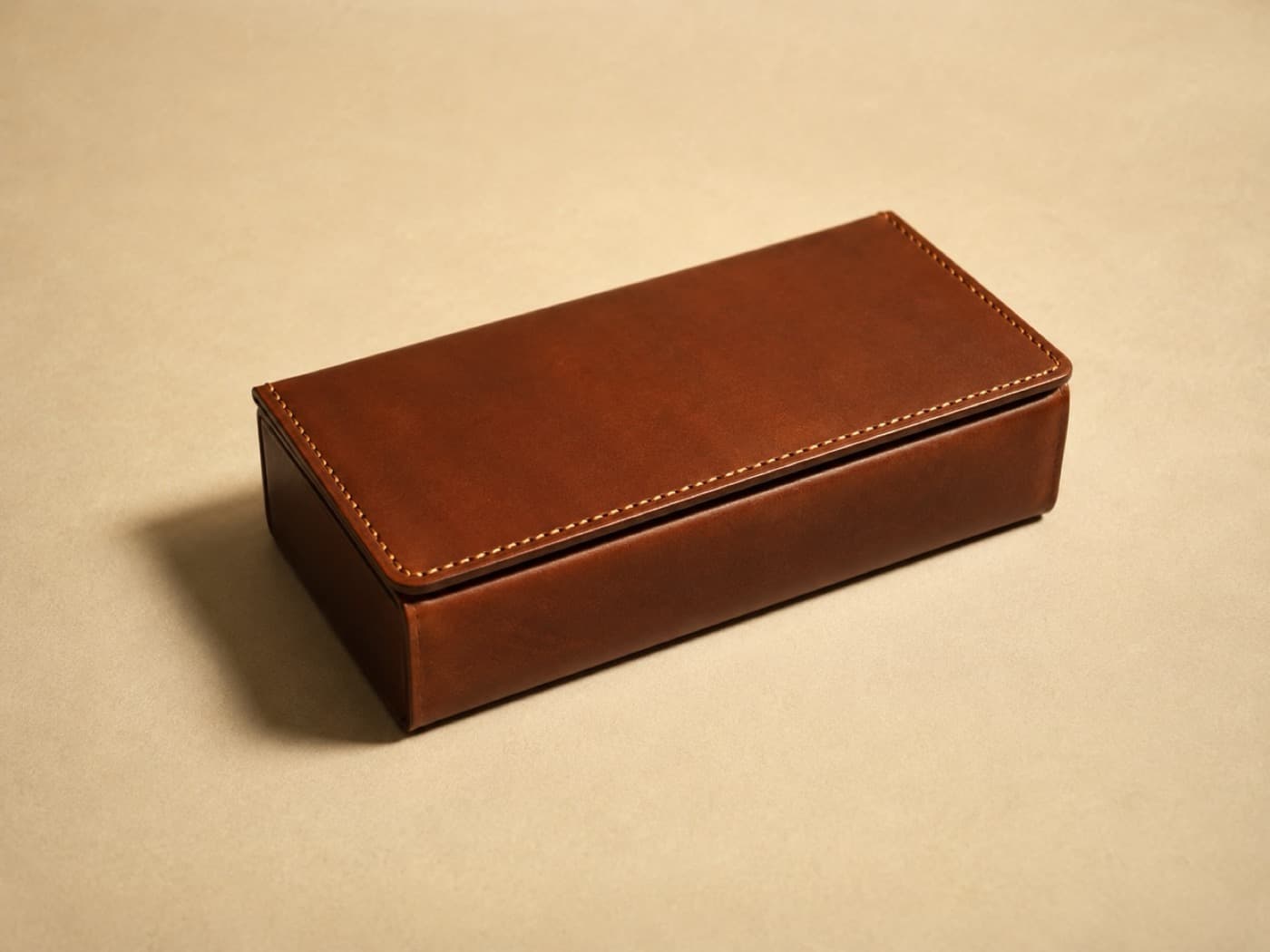 34
34A leather sleeve that goes over the box you already own. It is a cover, and nothing more.
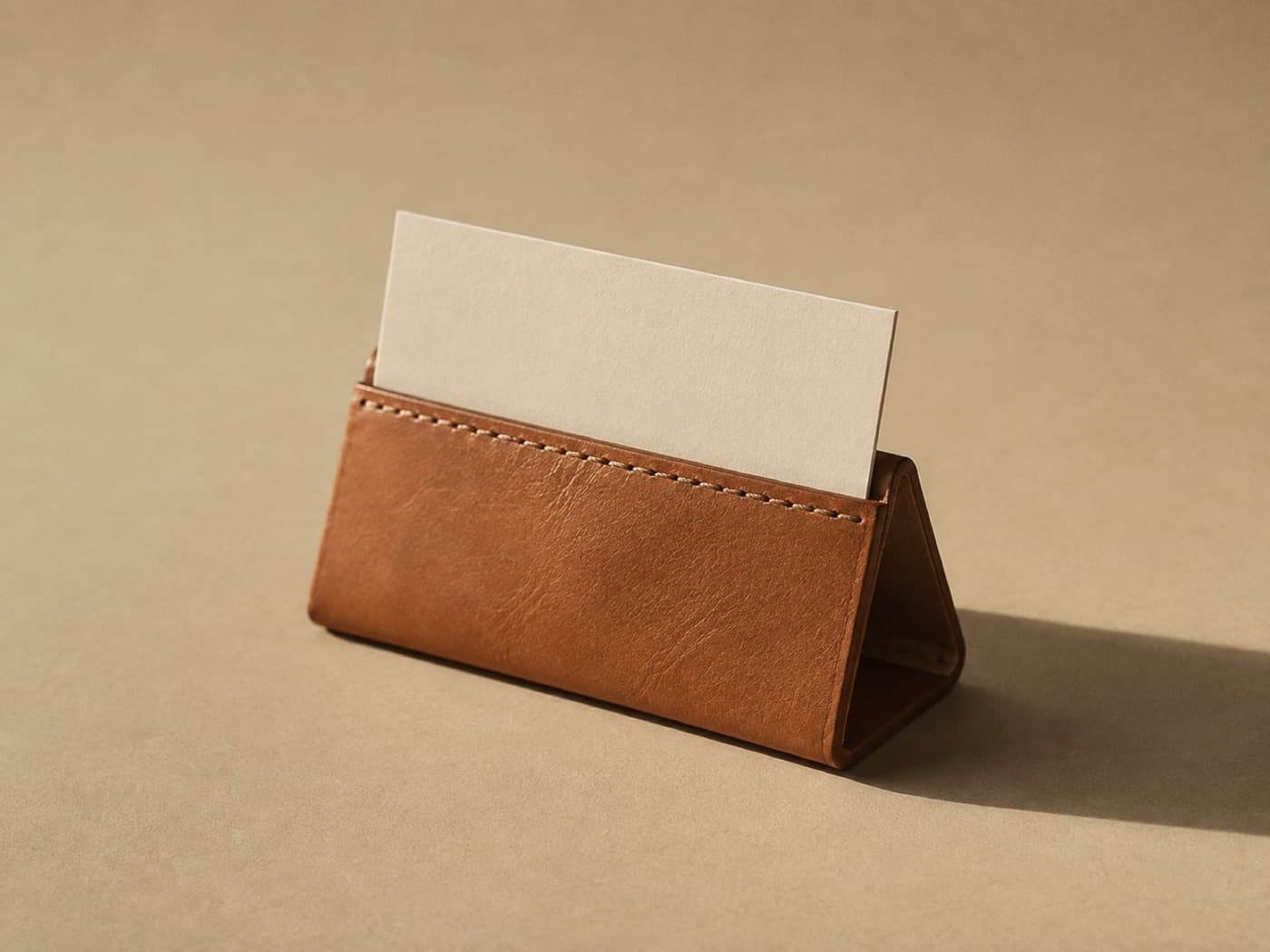 35
35A folded wedge with a slot along the top. Holds one card upright at reading angle.
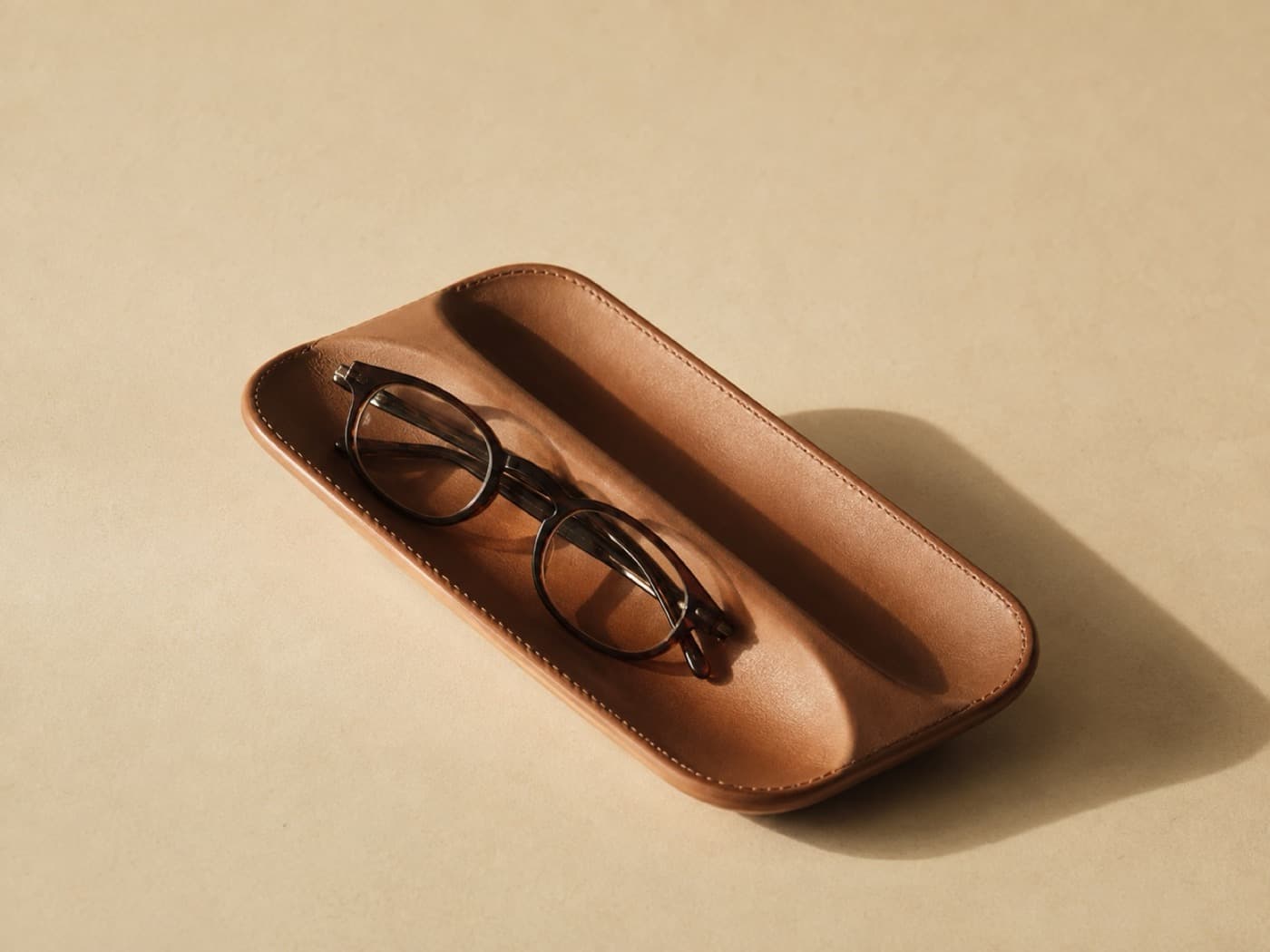 36
36Two moulded channels side by side. One for what you read with, one for what you press.
 37
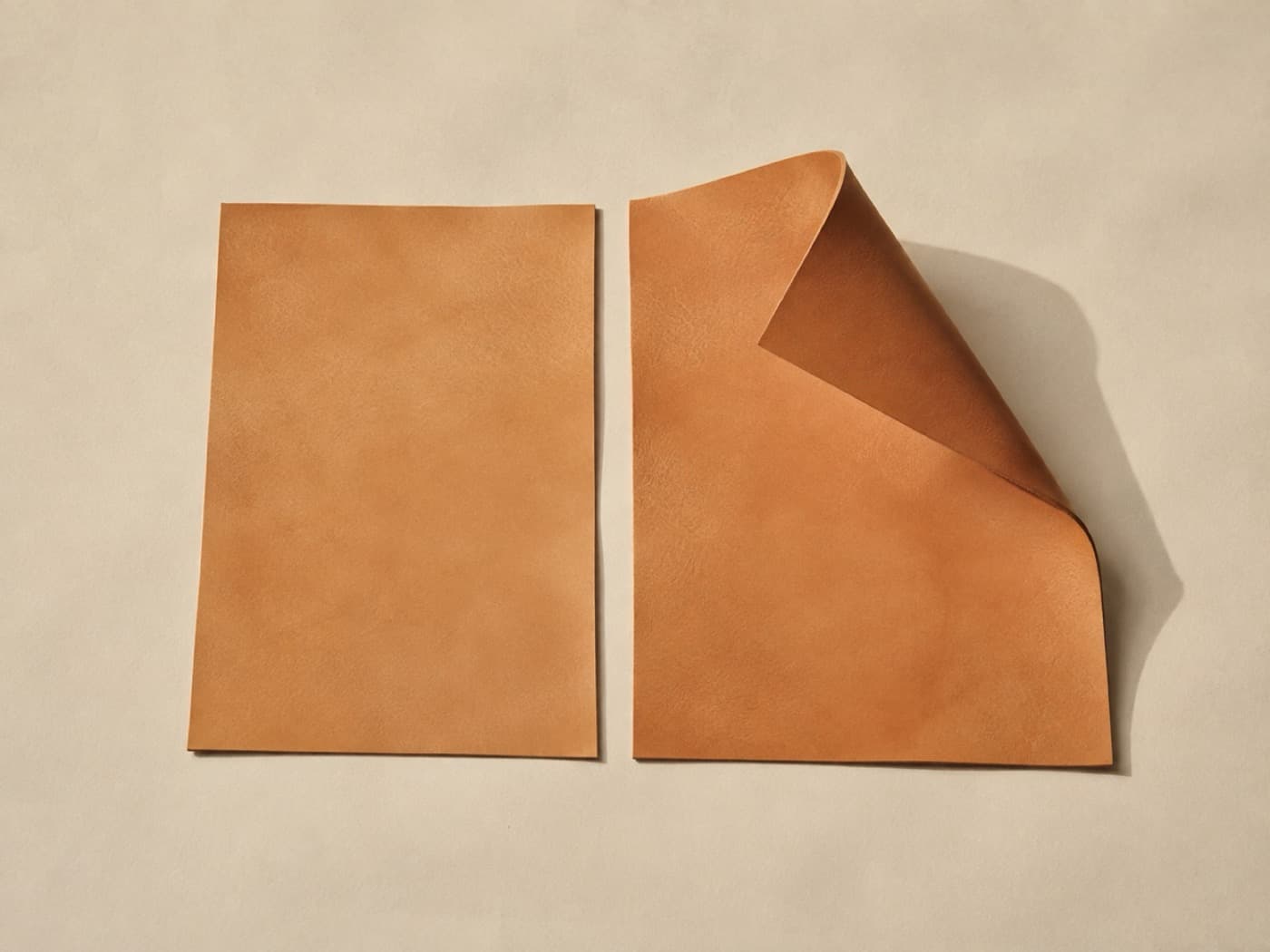
37Two thin split-leather sheets, sold oversized so you can cut them to your own drawer.
Line VI · Wohnraum-Details
The same flat leather language applied to the rest of the room: handles, hooks, frames, bookmarks. Small pieces, same hide, same edge finish.
Open this line on its own page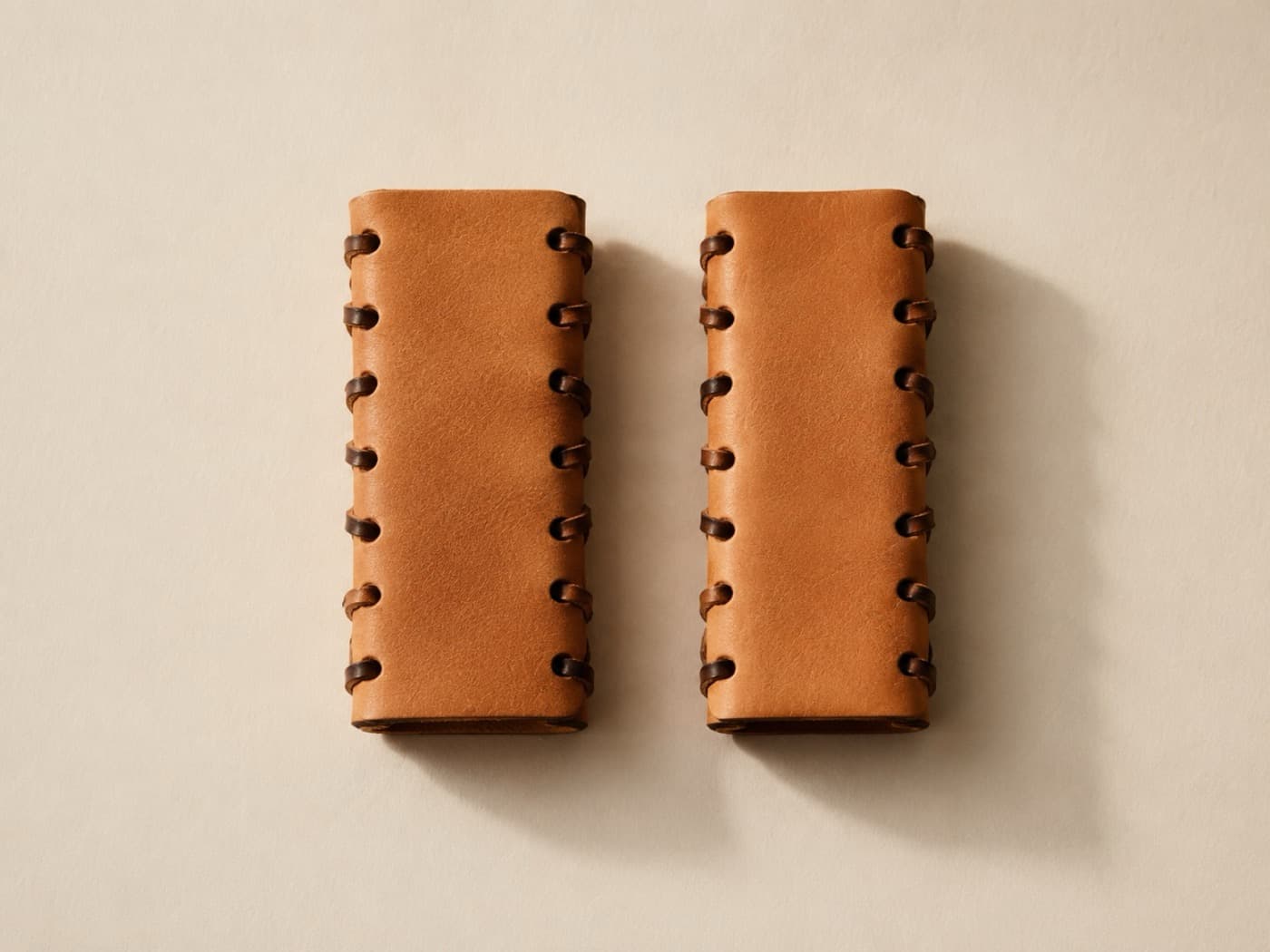 38
38Laced around a handle in about a minute. The one piece here that gets touched every day.
 39
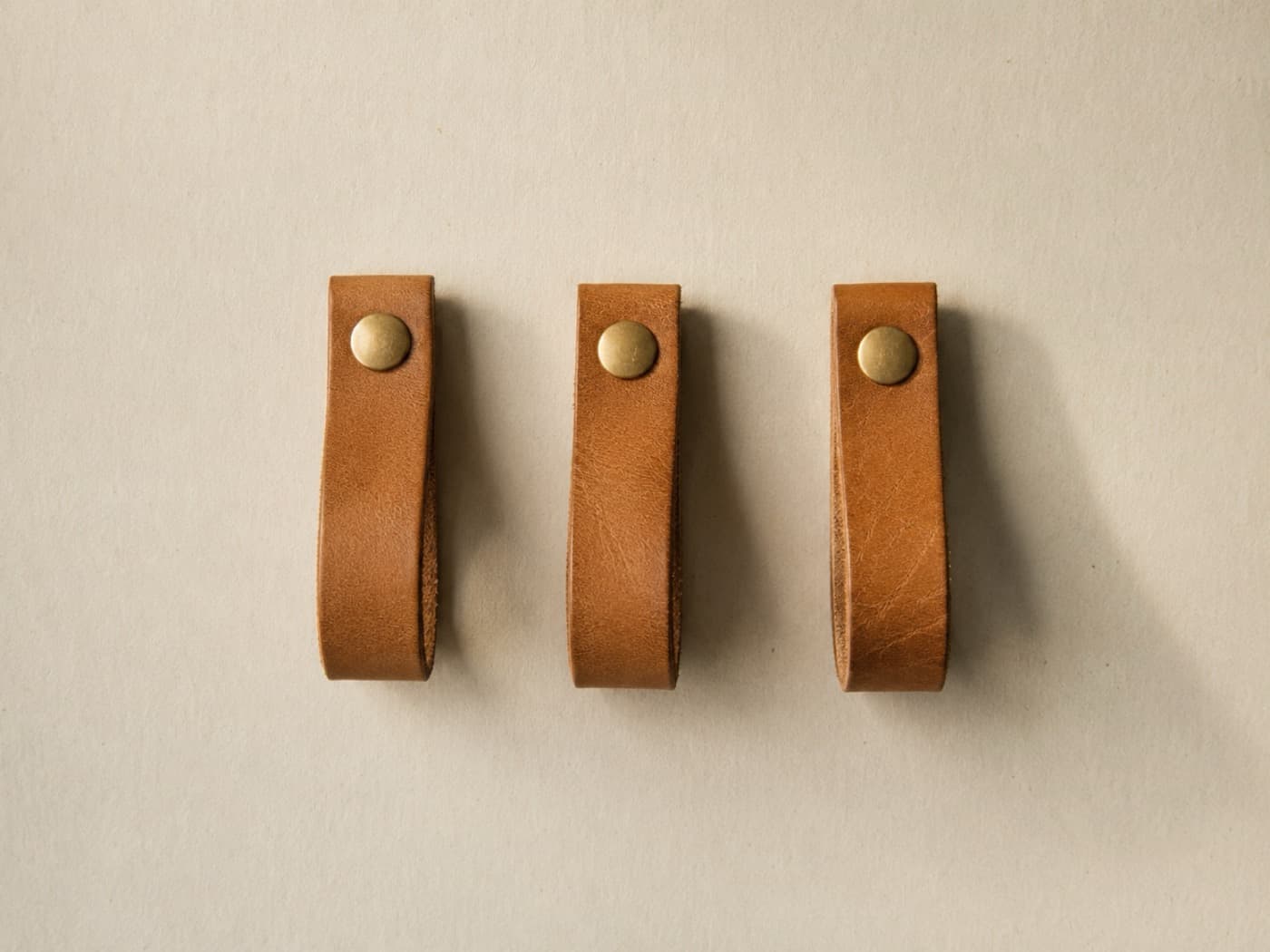
39Three snapped loops for a rail or a row of pegs. Light items only.
 40
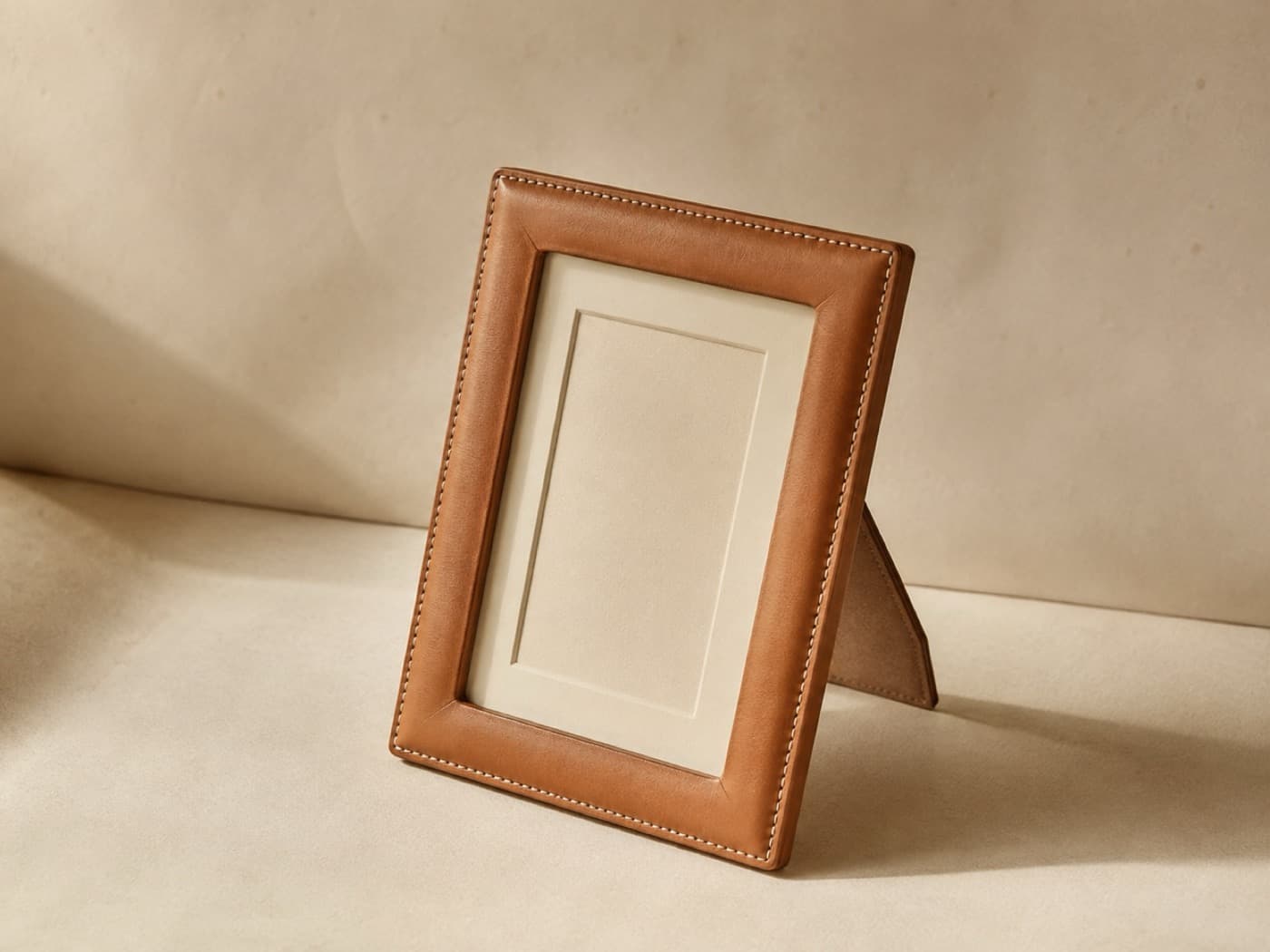
40Leather wrapped over board, with a strut that folds flat. Glazing not included.
 41
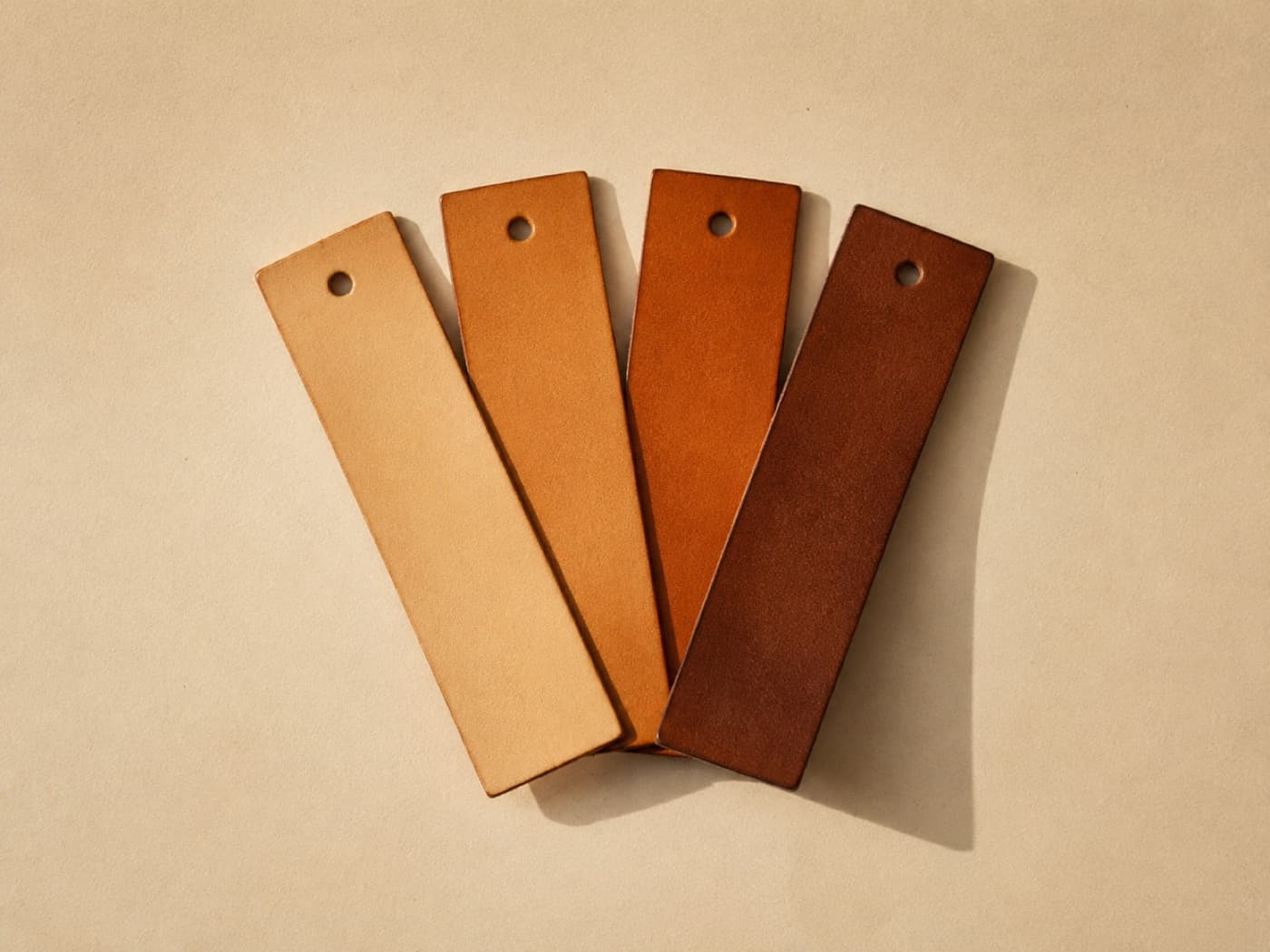
41Four strips in four tones, cut from the offcuts of everything else on this site.
Line VII · Sets
Three assemblies for people who would rather do this in a single pass. Each set is priced below the sum of its parts, and every strike-through price on this site is a real former price.
Open this line on its own page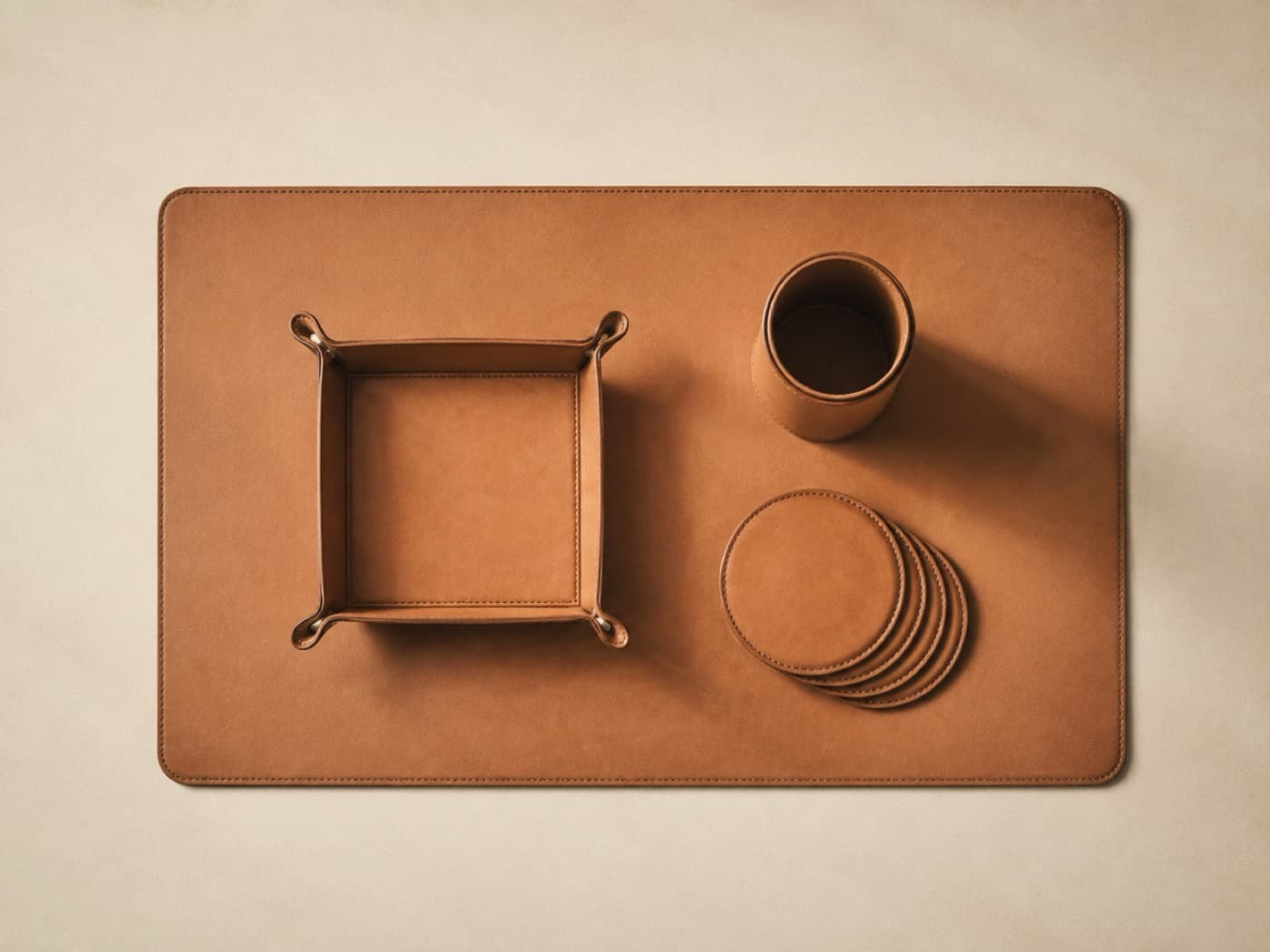 42
42The four pieces that change a desk the most, cut from adjacent panels so they match.
Underlay for tableware — not intended for direct food contact.
 43
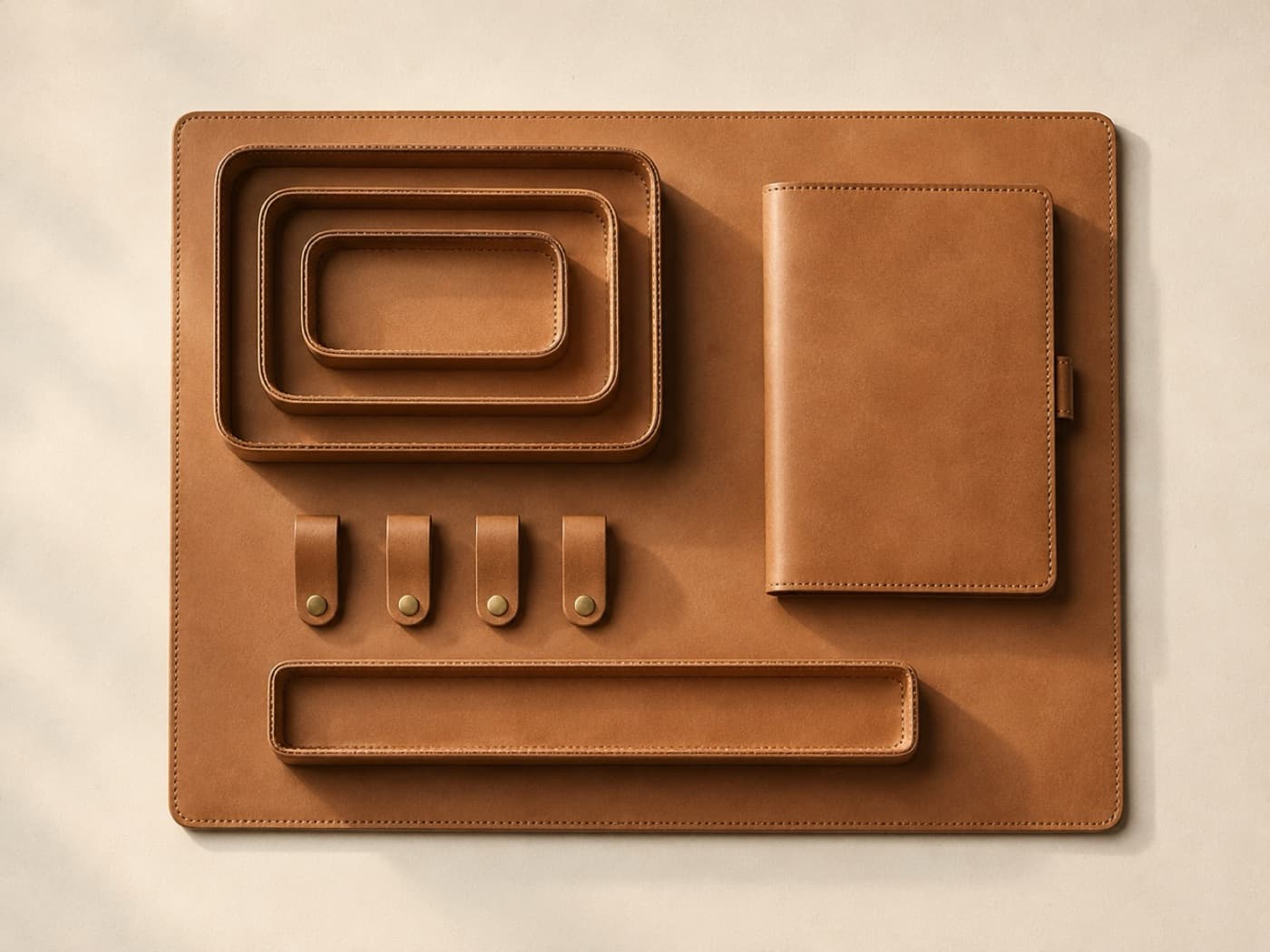
43A working desk, complete: the large mat, three nested trays, a notebook cover and the small parts.
 44
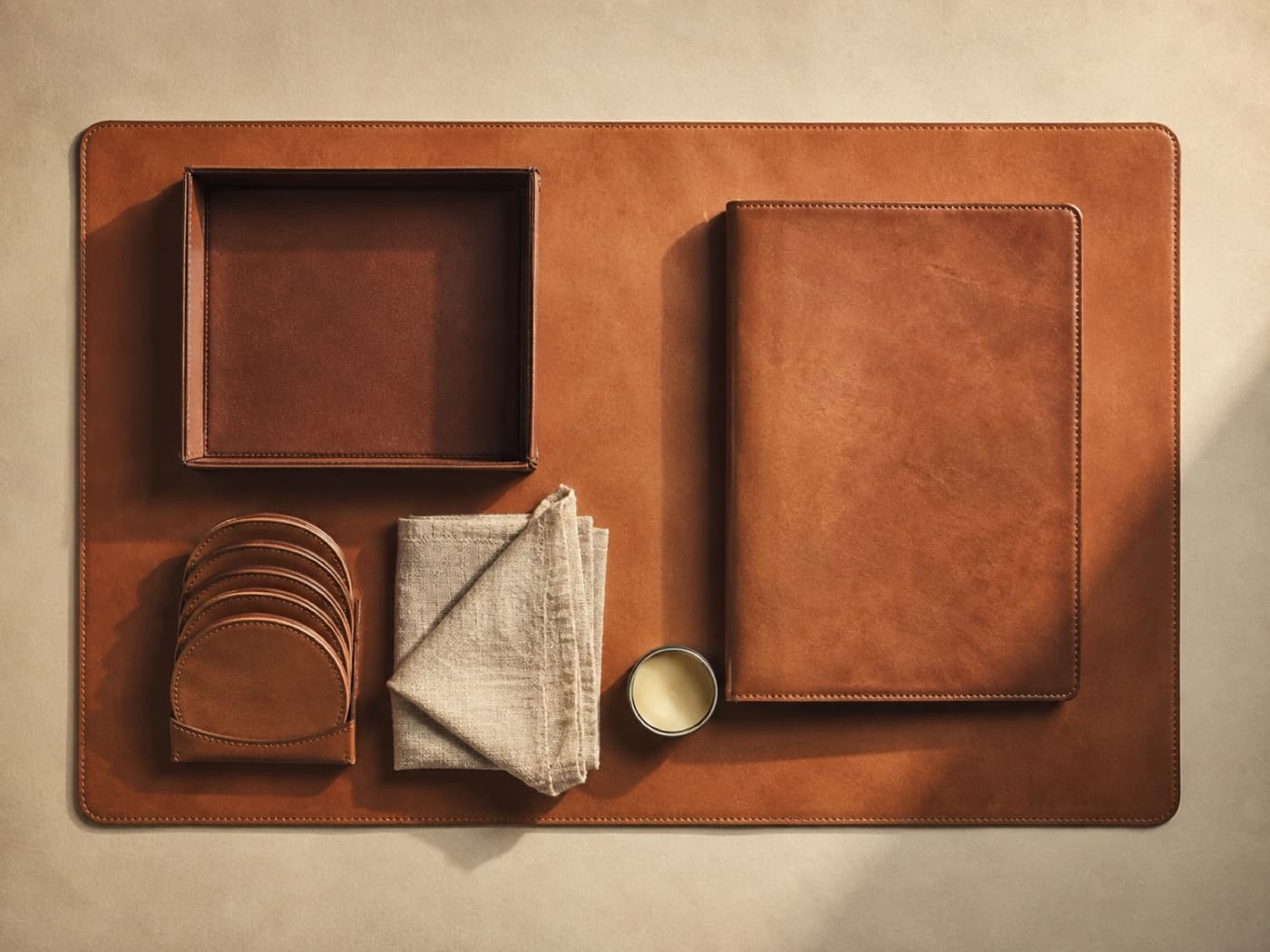
44Everything, at the largest size, with the care kit. The complete statement of what this workshop does.
Underlay for tableware — not intended for direct food contact.
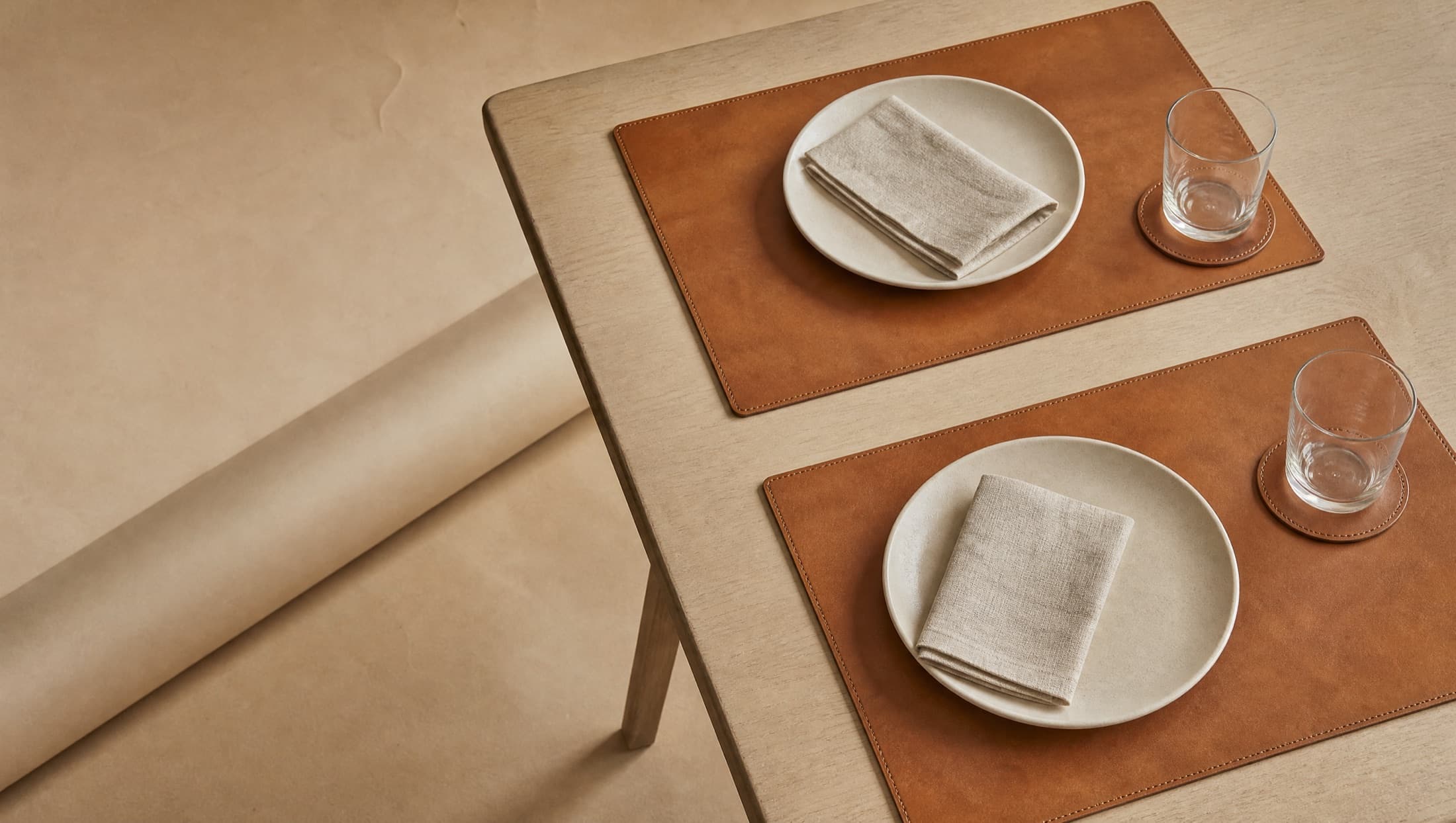
Tableware on top, always
The leather is the layer beneath, not the surface you eat from.