Care
XXIVA minute a week,
a balm twice a year
Vegetable-tanned leather does not need much, and most damage we see comes from doing too much rather than too little. Here is the whole routine.
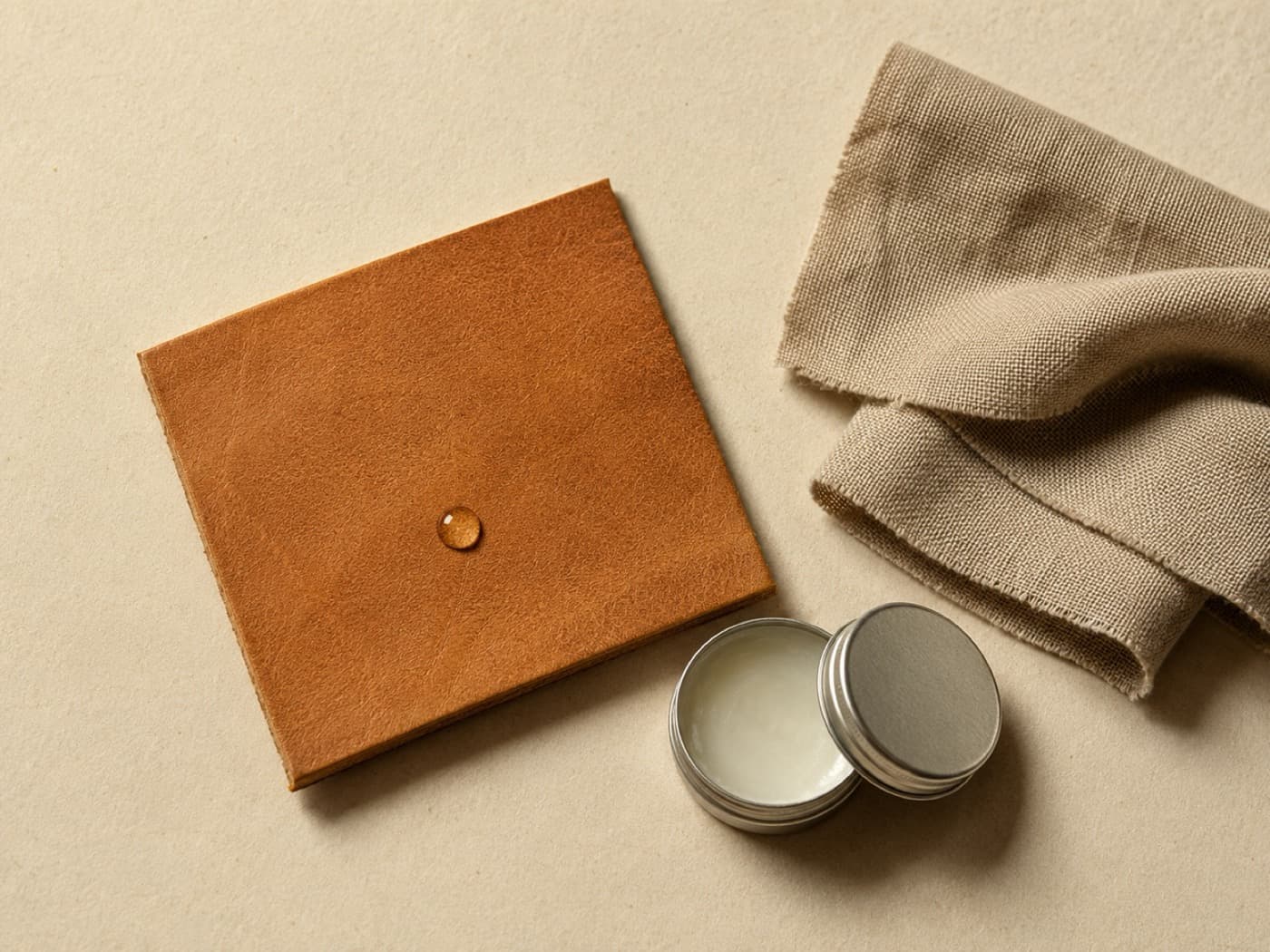
Weekly, one minute
Lift everything off and wipe the surface with a dry cloth, working with the grain rather than in circles. Dust is abrasive; a mat that is never wiped wears at the points where things sit on it.
A spill, immediately
Blot — do not rub. A dry cloth, light pressure, then let the piece dry flat at room temperature, away from any heat source. A water mark that dries slowly and evenly usually disappears into the patina within a few weeks.
Twice a year, colourless balm
A pea-sized amount on a cloth, worked thinly into smooth hide, left an hour, buffed off. Less is genuinely more: too much balm darkens unevenly and leaves a tacky face that attracts dust.
Suede and split leather, differently
A soft dry brush and nothing else. No balm, no water, no cleaning product. Split leather stains readily and does not recover from it.
Formed pieces, keep them filled
Trays, cups and boxes hold their walls better when they are not stored empty and squashed. A rolled-up cloth inside a pen cup over a long break is enough.
A new mat, two flat days
Mats travel rolled. Unroll and leave the piece flat and unloaded for a day or two before judging the lie — the curl relaxes out on its own and does not need weighting down.
What ruins a piece
Five things to avoid
- Heat. A pan straight off the hob, a radiator, a hairdryer. Leather shrinks and hardens above roughly 40 °C and does not come back.
- Standing water. A puddle left overnight leaves a permanent ring. Blot it the moment you see it.
- Solvents and disinfectants. Alcohol wipes, spray cleaners and glass cleaner strip the finish in one pass.
- Direct sun for months. A patina from daylight is even and good; a hard-edged bleached rectangle under a laptop foot is not. Rotate a mat occasionally.
- Too much balm. Twice a year, thinly. Monthly feeding makes a dark, tacky, dust-catching surface.
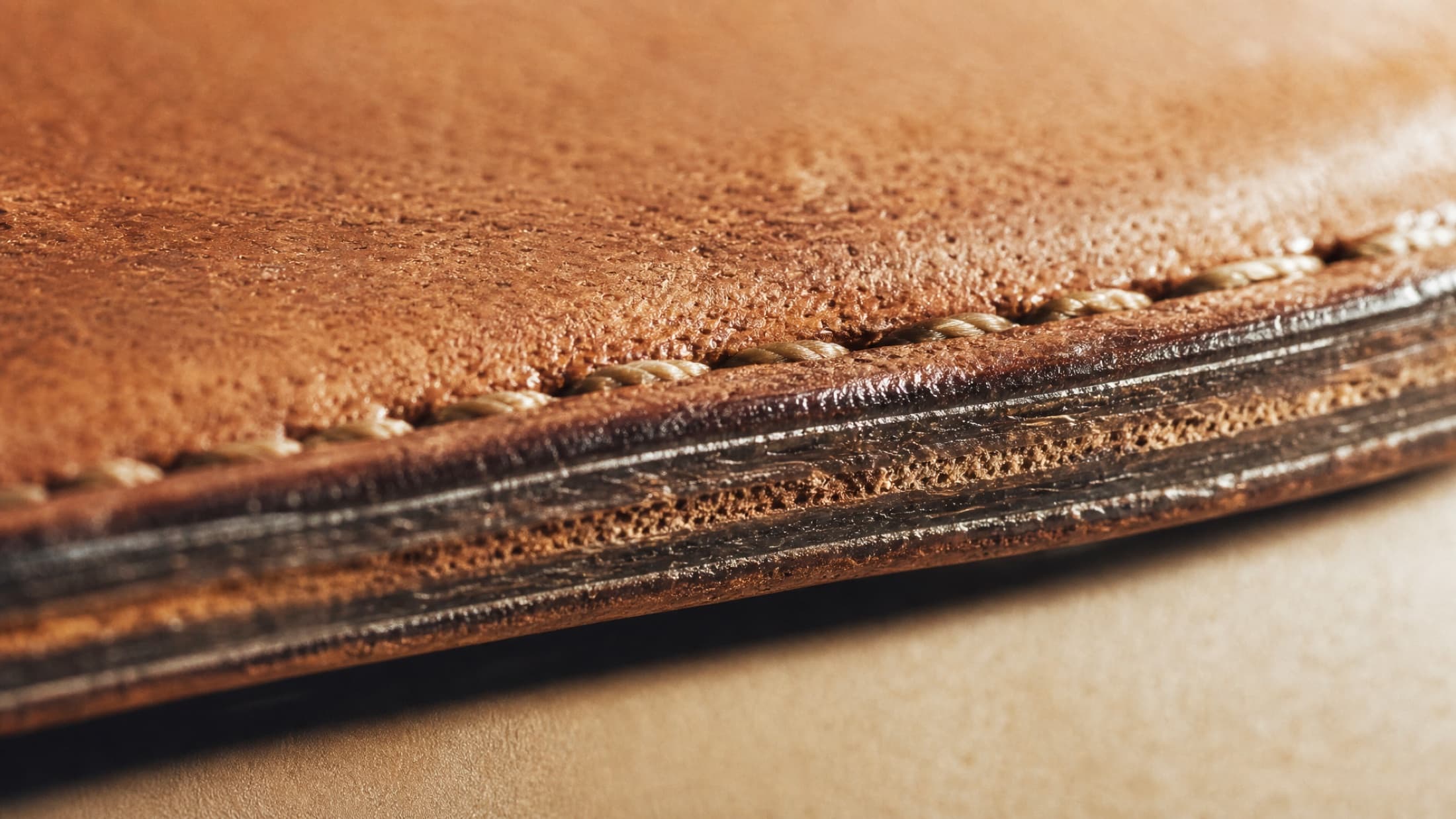
For the limits behind all of this — heat, moisture, colour transfer, tolerance, and which grade of leather is in which piece — see the material notes.